Knives Out, Triangle Of Sadness, The White Lotus – has the ‘eat the rich’ genre burnt out too soon? This article was published in the Film Stories Newsletter on 15th August 2025. If you want similar witterings in your inbox every Friday, sign up below: The post-Covid years of movie and TV-going have seen an ... Have we passed peak ‘eat the rich’?
Knives Out, Triangle Of Sadness, The White Lotus – has the ‘eat the rich’ genre burnt out too soon?
This article was published in the Film Stories Newsletter on 15th August 2025. If you want similar witterings in your inbox every Friday, sign up below:
The post-Covid years of movie and TV-going have seen an explosion in capitalist culture’s most contradictory genre. “Eat the rich” satire, from Glass Onion to Triangle Of Sadness and Succession, has dominated screens of all sizes and tastes, from streaming hits to Oscar nominees. It’s become prominent enough that Emerald Fennell was even able to flip the script with “eat the poor” spin-off, Saltburn. (Entertaining as that was, it’s not hard to see why its themes haven’t exactly caught on.)
It’s all gone rather well, really. Forbes reported in February that the richest 10% hold more than 50% of wealth in almost all countries globally. In the UK, the household income of the poorest 10% of homes fell by 7% between 2023 and 2024. In the US, oncoming cuts mean richest 1% will pay $121bn less tax in 2026.
Satisfied in their success taking on arms dealers, influencers and tech billionaires, it now seems audiences are tired of watching rich people being horrible to poor people and each other. Even as The White Lotus season three took the series’ viewing figures to new heights through social media momentum and Jason Isaacs’ ding-a-ling, Mike White’s chain of bougie island resorts didn’t quite live up to the critical adoration of seasons one and two. After four years of watching rich people being horrible and poor people defecating in suitcases, the novelty might be starting to wear off.
Ditto in the movie industry, where resort/personality cult thrillers Blink Twice and Opus got slightly lost in an overcrowded market, and Bong Joon-ho’s Mickey 17 was declared a flop almost before it arrived in cinemas. Whether it was the influence of the pandemic or the success of director Bong’s own Parasite in 2019, creative anger around economic inequality seems to have burnt itself out.
Now, Celine Song’s Materialists joins Babygirl, The Ballad Of Wallis Island and The Phoenician Scheme as a film with a more conventionally Citizen Kane-ish view of big-earners. Rather than seeing the hoarding of wealth as an evil done to others, the 1% are seen cutting themselves off at the knee (in one case, literally). Everyone knows money can’t buy you happiness; now it can’t buy love, sexual satisfaction, friendship or secure your legacy after you’re gone. If the 2020s so far have been about how the 1% make everyone else miserable, now we’re reminded that the rich and powerful aren’t thrilled about all this either.
Read more: When condom companies used movies to sell their products
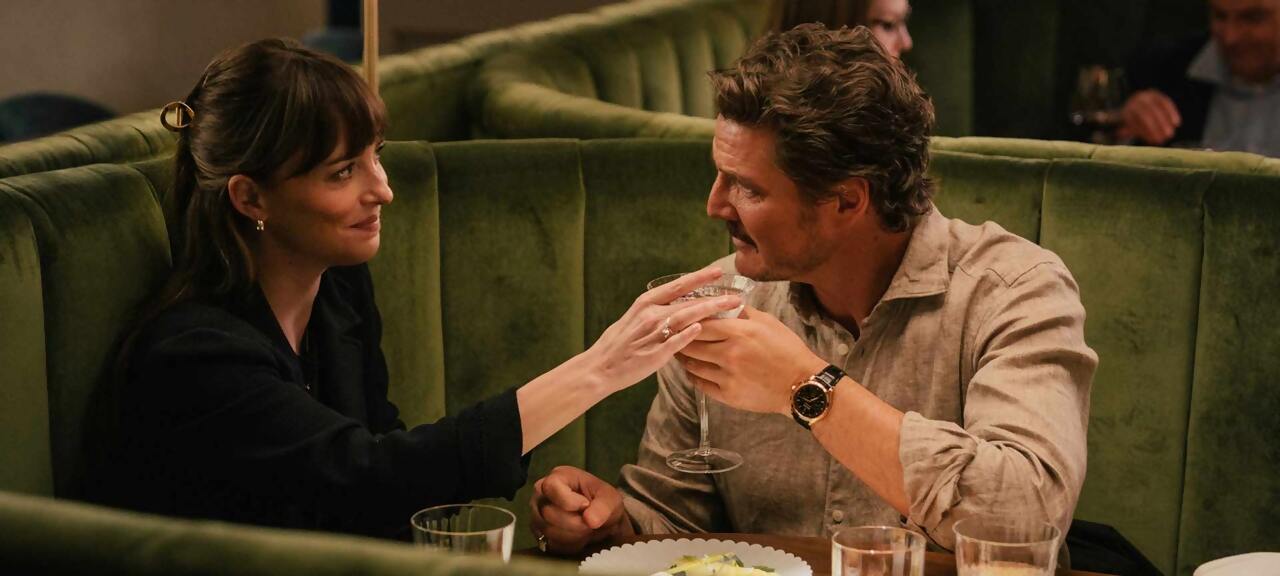
Of all the above, Materialists might have the most to say on the subject. Song’s wry look at the modern dating scene starts as the story of a professional matchmaker (Dakota Johnson) caught in a love triangle between a millionaire financier (Pedro Pascal) and her bed-headed ex (Chris Evans). As the story progresses, though, the most pressing dilemma of the film isn’t what our heroine wants. It’s what the people around her think they want: a six-figure salary, a symmetrical face, and a thousand-dollar dress. It’s a film about people trying to use labels and statistics to game an activity defying labels and statistics.
Money in Song’s world can’t make you happy, because no one thing can make you happy. It’s a film about the uncertainty of a life worth living, where a bigger number on your bank balance or your height is just as likely to make you miserable as crossing the street. Wealth isn’t an evil done to others or to yourself; when it comes to personal fulfilment, it’s scarcely got anything to do with it. When Johnson’s Lucy chides herself for her desire to visit nice restaurants, she’s a character torn between her heart and what society has conditioned her to expect from romance.
It’s a take which nonetheless signals a break from a surprisingly radical period of pop culture filmmaking – one where some of the years’ biggest grown-up hits swung far more to the economic left than modern politics would suggest is possible. Is it odd that change is coming just as right-wing parties and narratives are gaining renewed traction around the world? Or is it a reminder of just how divorced culture and politics have become from each other – how anger at the state of the world can burn itself out just as the problems are getting worse.
Instead, film and TV don’t seem as angry at rich people as they once were – they just seem tired, and hoping the billionaires are as miserable as we are. No more rich for us, please; we’re full.