For years, Invasion Of The Body Snatchers has been accompanied by talk of political allegory. But its director had a different message in mind… If director Don Siegel had gotten his way, it wouldn’t even have been called Invasion Of The Body Snatchers. His preferred title was the more literary Sleep No More. Nor did ... Invasion Of The Body Snatchers at 70 | Still an urgent warning about mindless conformity
For years, Invasion Of The Body Snatchers has been accompanied by talk of political allegory. But its director had a different message in mind…
If director Don Siegel had gotten his way, it wouldn’t even have been called Invasion Of The Body Snatchers. His preferred title was the more literary Sleep No More.
Nor did Siegel like his film’s beginning and ending. A wrap-around sequence, which turns the film’s core events into a flashback and robs the plot of a shocking, fourth-wall breaking final shot, was added at the studio’s insistence. He didn’t want it; his screenwriter Daniel Mainwaring, didn’t like it. Executives at Allied Artists said the framing device was being added anyway, with or without Siegel. He figured he may as well shoot the extra scenes and at least ensure that they looked right.
It says a great deal about Invasion Of The Body Snatchers that, even with these compromises, it’s still one of the great genre films of the 1950s. Favouring performances over special effects and an air of creeping dread over cheesy shocks, it’s a science fiction horror of unusual intelligence. In fact, the themes and messages it carries are absolutely timeless.
Kevin McCarthy plays Miles Bennell, a small town doctor whose patients begin complaining that their loved ones aren’t who they say they are. At first, he puts it all down to some form of mass hysteria. But gradually – all too slowly – Bennell and his circle of friends realise that the town of Santa Mira is being quietly taken over by alien invaders, who replace human bodies with identical replicas grown from plantlike pods.
Emotionless and coldly logical, these pod-born replicas have only one goal: to quietly perpetuate their species, to quietly spread across the planet before anyone has the time to stop them.
“There’s no need for love,” a pod-copied Dr Kauffman (Larry Gates) tells Bennell. “We’ve all been in love before. It never lasts. Love, desire, ambition, faith… without them, life’s so simple, believe me.”
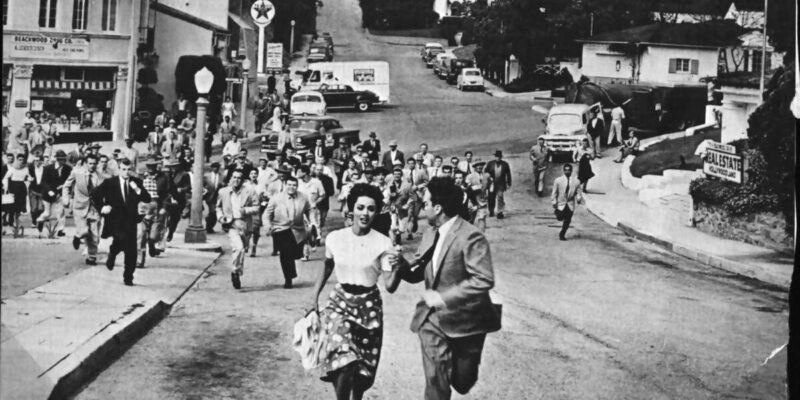
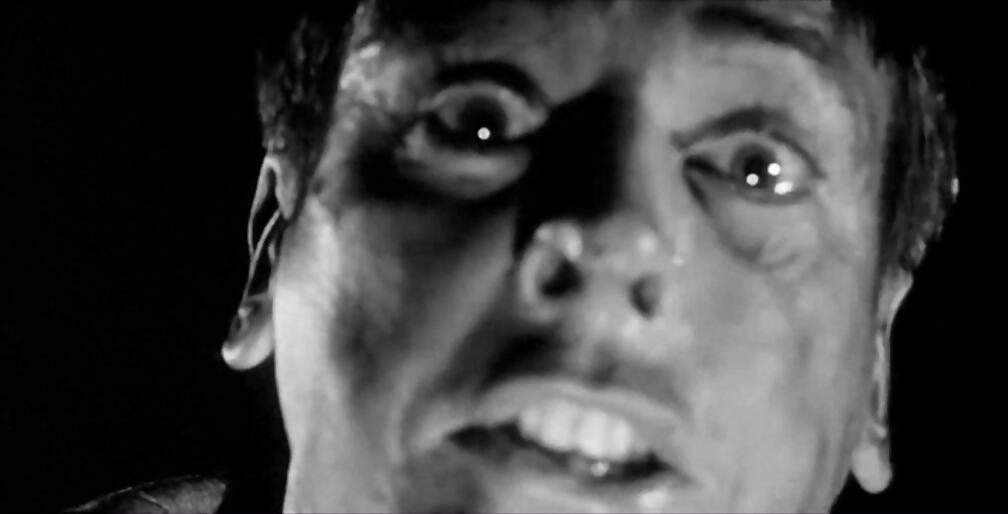
Gradually, the remaining humans in Santa Mira are whittled down, leaving Bennell alone on a highway, frantically trying to warn the cars hurtling past of the threat that is about to fan out to other American towns. “They’re here already!” Bennell yells into the lens. “You’re next!”
It was such a chilling moment that Allied Artists insisted on the wrap-around scenes mentioned above: Bennell is arrested, manages to convince the authorities that there’s an invasion underway, and the pods’ spread is stopped in its tracks by the FBI.
Arriving amid a glut of similar sci-fi B-movies in 1956, Invasion Of The Body Snatchers was a success with audiences, but critics were slow to pick up on the brilliance of its acting and directing. As the film’s following grew, however, an increasing number of critics began to ponder its perceived political meaning.
Was it intended as a ‘Red Menace’ film about the supposed threat of Communism? Or was it meant as a comment on anti-Communist fervour – the kind of angry groupthink which led to Replican senator Joseph McCarthy’s infamous House Un-American Activities Committee.


Siegel often denied that there was any intended political meaning behind Body Snatchers, and Jack Finney, who wrote the 1954 source novel, said that he wrote it with entertainment in mind rather than allegory.
Often, when filmmakers deny a deeper meaning behind their work, it’s to avoid being dragged into some political quagmire. In Siegel’s case, however, it seems that he genuinely had his own interpretation of what the ‘pods’ represented – and it had nothing in particular to do with anti-Communism or anti-McCarthyism.
In 1973, Siegel gave a lengthy interview to Cinefantastique magazine about Invasion Of The Body Snatchers – one that doesn’t appear to have been quoted all that often online. In it, the filmmaker said that his pods were designed to represent a certain kind of apathy and unthinking conformity.
The film, he says, was about pods, but “not those that come from outer space.”
“People are pods. Many of my associates are certainly pods. They have no feelings. They exist, breathe, sleep. To be a pod means that you have no passion, no anger. The spark has left you.”
Invasion Of The Body Snatchers was made in a decade where millions were moving into the kind of cosy suburbs depicted in Siegel’s movie. The US economy boomed in the wake of World War II, leading to an explosion in consumerism and advertising. It was also a period of increasing social and political conformity – as proven by those McCarthyist Communist trials.
Siegel suggested that his film wasn’t so much a reaction to the politics of the time, specifically, as it was a warning to a generation of people sleepwalking into an age of mindless consumption.
“I think there’s a very strong case for being a pod,” he said. “These pods, who get rid of pain, ill health and mental disturbance are, in a sense, doing good. It happens to leave you with a very dull world, but that, by the way, my dear friend, is the world that most of us live in. It’s the same as people who welcome going into the army or prison. There’s a regimentation, a lack of having to make up your mind, face decisions.”

To Siegel, to become a pod was to become a member of the living dead; when interviewer Stuart Kaminsky suggested that “to be a pod is the same as not existing,” the director replied, “That’s right.”
This places Invasion Of The Body Snatchers in the same lineage as George A Romero’s Night Of The Living Dead (1968), itself about humanity being turned into unthinking hordes. Certainly, that film’s 1978 sequel, Dawn Of The Dead, was specifically about human beings becoming literal hollow-eyed consumers.
What makes Invasion Of The Body Snatchers so brilliant is that its themes and anxieties are so timeless. In the 1950s and 60s, viewers saw it through the lens of Cold War tensions and fears of a Communist takeover.
In the 1970s, 90s and 2000s, a trio of remakes put their own spin on Body Snatchers’ quiet invasion concept; director Philip Kaufman updated it for the era of pop psychology and Watergate in 1978. Abel Ferrara’s 1993 remake retooled it as a comment on military dehumanisation – fascinatingly, a subject Siegel himself brought up in that quote above.
Then there are all the unofficial ‘homages’, from The Invaders TV series in the 1960s to last year’s Pluribus, which showrunner Vince Gilligan has said owes a debt to Body Snatchers. (It is “the granddaddy of them all,” he wrote on Letterboxd.)
Sixty years on, and it’s possible to view Invasion Of The Body Snatchers in the light of a technological landscape where human thought and creativity is being outsourced to machines. More than ever, we’re being asked to consume more, to scroll more and think less. But as Body Snatchers warns us, to be a pod, to exist without passion or spark, isn’t really an existence at all. It’s a plea for all of us to wake up before it’s too late.
“People without being vegetables are becoming vegetables,” Siegel said. “I don’t know what the answer is except an awareness of it. That’s what makes a picture like Invasion Of The Body Snatchers important.”