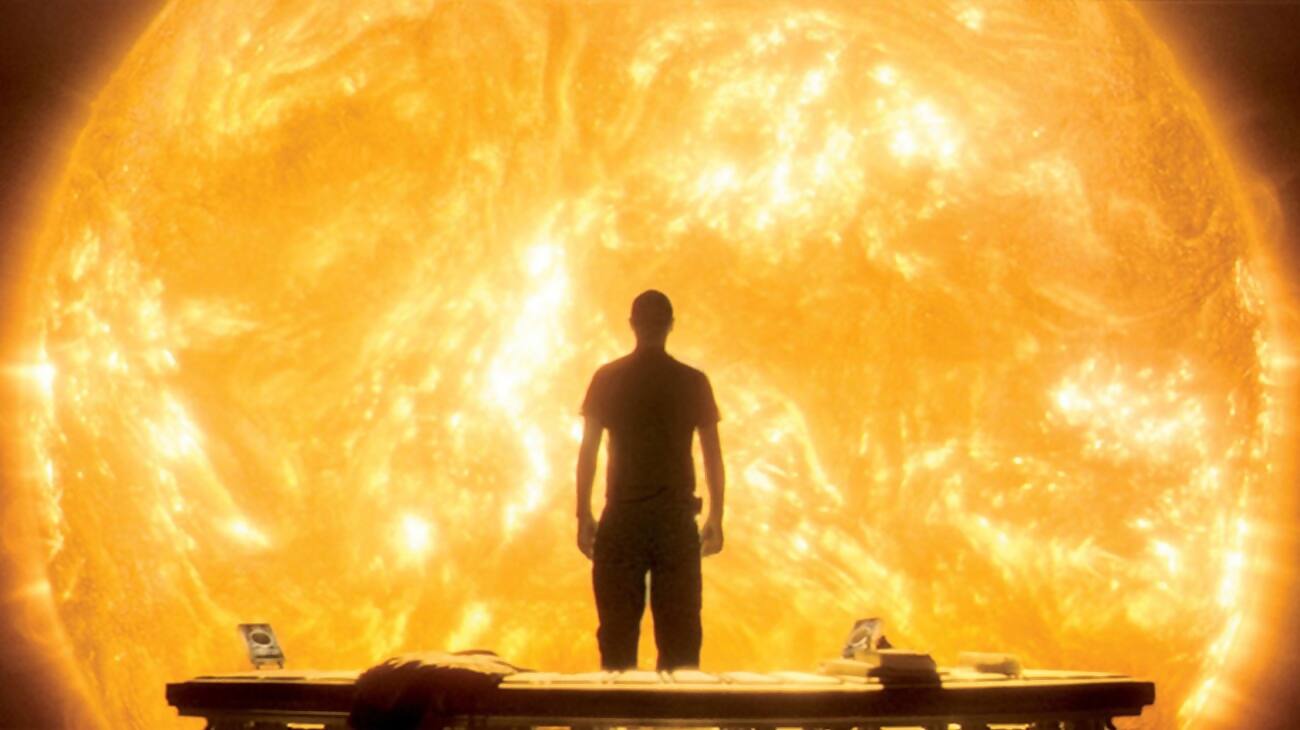
Almost 20 years on, director Danny Boyle’s flawed sci-fi epic Sunshine is still a spectacular looking movie. Shame about that ending. NB: The following contains spoilers for Sunshine (2007). Some movies are worth a second chance. The first time I saw Sunshine, Danny Boyle’s 2007 sci-fi odyssey, it was in the cinema the week it ... Sunshine is still Danny Boyle’s most beautiful-looking film
Almost 20 years on, director Danny Boyle’s flawed sci-fi epic Sunshine is still a spectacular looking movie. Shame about that ending.
NB: The following contains spoilers for Sunshine (2007).
Some movies are worth a second chance. The first time I saw Sunshine, Danny Boyle’s 2007 sci-fi odyssey, it was in the cinema the week it came out, and I was somewhat nonplussed. Great build-up, I thought; but what’s with that third act? Wasn’t it a bit, well, Event Horizon? Or, really, an awful lot like Event Horizon?
Inspired by Project Hail Mary – another save-the-dying-sun epic – I recently revisited Sunshine for the first time in almost 20 years. And while the same caveats remain – including the Event Horizon gripe – I have a far greater appreciation for just how stunning Sunshine looks. I’d even argue that Boyle, who has a knack for coming up with arresting images, has never bettered his work here. It’s surely his most captivatingly beautiful film.
By the mid 21st century, the Earth is in the grip of a new ice age as the sun’s power has begun to fade. In a last-ditch effort to jump-start it again – humanity’s hail mary, if you like – a group of experts are dispatched on a ship called the Icarus II. Their mission: to deploy a gigantic nuclear bomb capable of jolting our nearest star back to life.
As the name of their ship implies, there was an earlier attempt at the same project, which went awry under mysterious circumstances: the original Icarus vanished seven years before, its crew silent and now presumed dead.
“Whatever it was that tripped them up,” Michelle Yeoh’s botanist Corazon says, “I don’t think it was a lack of oxygen.”
Just to underline the ominous tone of that sentence, Boyle then cuts to Cillian Murphy’s physicist Robert Capa brawling with Chris Evan’s engineer, Mace. “We have an excess of manliness breaking out in the comm center,” Rose Byrne’s pilot Cassie wryly reports to the ship’s captain Kaneda (Hiroyuki Sanada).
Within these opening 10 minutes, Boyle and screenwriter Alex Garland set out the themes that drive the rest of the movie. The crew’s mission may be dangerous, perhaps even futile. But humanity’s biggest danger is always its own hardwired flaws: its war-like nature, its superstition and sheer clumsiness. They’re flaws that may have upended the previous Icarus mission, Garland suggests, and will likely be the undoing of this one, too.
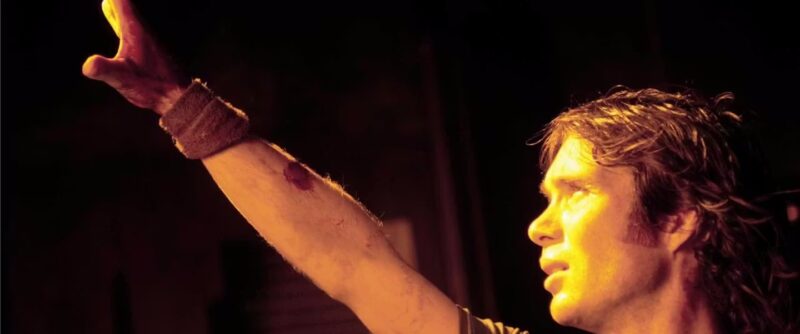
Boyle’s earliest and most insistent image is that of Icarus II’s doctor, Searle (Cliff Curtis) staring at the sun’s vast glare, shimmering with intensity even through a protective screen. The sense of energy seems to awaken a quasi-religious sense of awe in Searle, who eventually does so much sun-gazing that his skin begins to blister.
Here, we can see the same interest in self-destruction that has informed so much of Garland’s other work – whether it’s the dark motivations that drive the characters in Annihilation or the divisions that lead an entire nation to tear itself apart in Civil War.


Suggested product
Issue #60 Magazine Bundle (3x Covers: A Scanner Darkly Magazine + 1991 + Roger Deakins)
£14.99
Boyle’s skill as a filmmaker lies in his ability to balance these heavy, quite gloomy themes with images that capture a sense of wonder. There’s a brief moment where the crew stop to watch the planet Mercury cross the face of the sun; Boyle and cinematographer Alwin H. Küchler take in their faces as they gaze, expressions almost childlike, at a sight humans only previously saw through a telescope.
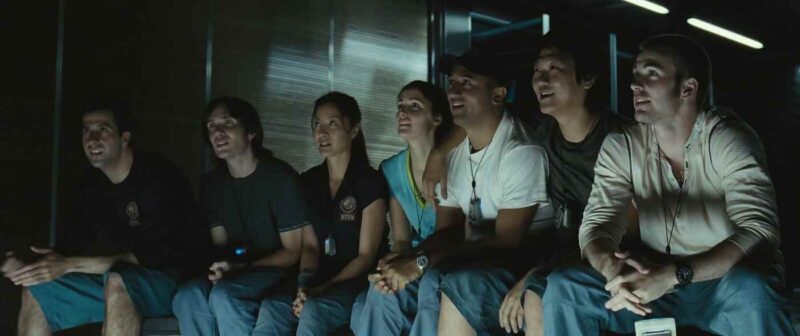
Sunshine is studded with morsels like these, where Boyle takes a few seconds away from the nuts and bolts of sci-fi storytelling to give us a flavour of the sun’s heat and strength, or show how shadows shift as the surface of a planet moves in space.
Boyle turned down a sci-fi epic before Sunshine – he considered making what became Alien Resurrection, then bowed out – and ruled out making another space film of its type afterwards. “There’s a reason why many directors only make one science fiction film,” he told Mark Kermode in 2007. “It’s because you exhaust yourself… spiritually.”
It’s a pity, because his skill as a visual storyteller is well suited to this kind of movie. While Sunshine evokes the usual genre suspects – Ridley Scott, Stanley Kubrick, Andrei Tarkovsky – Boyle brings his own stylistic quirks to the material. There are some memorably weird, baroque gold space suits, designed to provide at least a few seconds’ grace from deadly solar heat. He makes the Icarus II feel cold and sterile – a combination of Alien’s oil rig in space and a claustrophobic oral health clinic.
The idea being, Boyle later told American Cinematographer, to contrast the chilliness of the ship with the intense yellows and oranges of the sun. “The film’s gray-blue palette is a convention of space movies,” he said; “it’s a diet the audience expects. We take it a step further and starve them of any warm colours until they see the sun itself.”
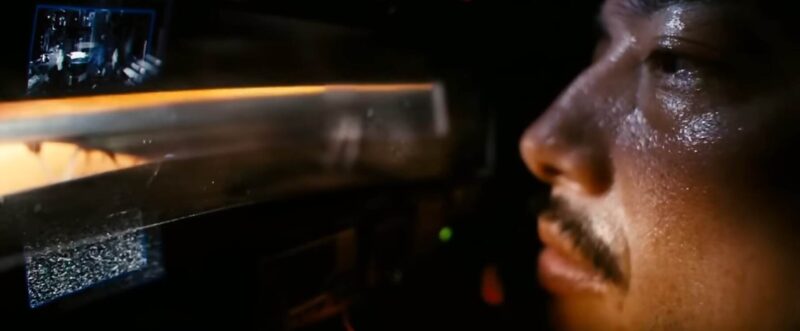
For a film approaching its 20th birthday, Sunshine has aged remarkably well in this regard – particularly given that its budget was a decent but not huge $40m. The visual effects were handled by MPC, who digitally re-created the sun based on NASA reference data, and designed the movie’s Icarus ships with their mile-wide, umbrella-like sun shields. The film’s visual design, which favours intense contrasts of light and dark, helps integrate the physical and digital elements – and in an age of washed-out, low-contrast movies where it’s sometimes hard to see what’s going on, Sunshine could be used as a case study for how a 21st century sci-fi film should be lit.
There is, at least for this writer, no getting away from that third act turn, however, which almost turns Sunshine into another movie. On the final leg of their journey, the Icarus II stumbles on the previous explorer’s stricken ship. After much debate, the crew decides to alter their course and investigate – Searle’s argument being that they could retrieve the Icarus’ nuclear payload, giving them two chances of blasting the sun back to full health.
It’s a decision which leads to several lost lives, the destruction of a valuable source of oxygen, and tension among the remaining crew. Still, the astronauts manage to reach the Icarus, where they discover that (seemingly) everyone aboard is dead and that the mission was sabotaged – a recorded log revealing that the culprit was one Captain Pinbacker (Mark Strong) whose own exposure to the sun appears to have turned him into a badly-burned fundamentalist. He’s essentially Searle, just way ahead on the solar-induced madness curve.
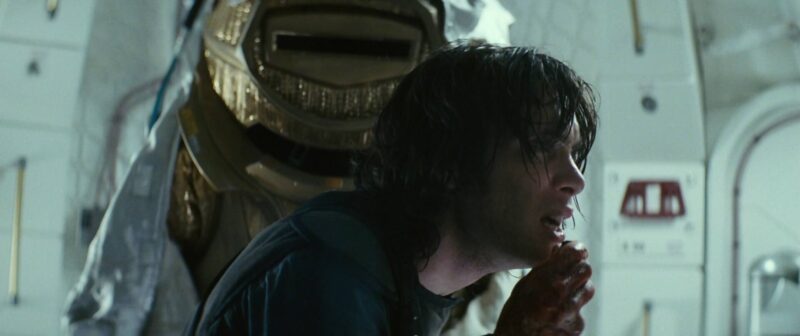
Sunshine’s final third then descends into space slasher territory, as Pinbacker, who’s miraculously still alive, boards Icarus II and murders everyone he can find. Given the more cerebral tone elsewhere, it remains a baffling tonal shift. Event Horizon director Paul WS Anderson signposted from the beginning that he was making Hellraiser in space, and Sam Neil’s scarred villain felt entirely fitting in a film where the cast is essentially flying around in a space-going Notre Dame.
The tricksier aspects of Boyle’s filmmaking style also rear their head in the third act. The use of lens distortion and jarring cuts are distracting and at times obfuscate what we’re even supposed to be seeing. They half imply that even Boyle doesn’t have much faith in his final turn, and has opted to use tricksy cinematography to prevent us from looking at the makeup effects too much. (It also means that Mark Strong is barely seen properly outside a couple of grainy video recordings, which is an odd waste of a great character.)
A quick look at a 2004 draft of Garland’s original script reveals that a number of subtle changes were made, both to individual characters and the conclusion. A gun is introduced on page 42, which isn’t in the finished film. Cassie is a spikier, randier character than the one Rose Byrne plays on screen, and winds up using the gun rather indiscriminately in the final act.
More pivotally, Pinbacker has more to say in Garland’s script. Although he’s still a sun-scorched, religious maniac, he’s also given the chance to explain in more detail why he killed his entire crew. Restarting the sun, Pinbacker says, would just be delaying the inevitable: eventually, the star will die, as everything must die.
“It’s not in our destiny to survive,” Pinbacker tells Capa. “It’s not even in our nature. None of us do it. Not our parents. Not our children. Not the fishes, or the birds, or the trees. Not even god.”
The film changes all this, shifting Pinbacker’s motivation to an earlier video recording, where it’s short and easy to miss (“All our science, our hopes, our dreams are foolish… it’s not our place to challenge God”). Capa meets Pinbacker face to face at the end of the film, as he does in the script, but the villain’s speech has been distilled down to a more cheesily portentous:
“For seven years I spoke with God. He told me to take us all to heaven.”
It’s a small change on the face of it, but one that turns the meeting between Capa and Pinbacker into a straight horror moment; Garland’s wordier, more philosophical scene was at least in keeping with the rest of the story’s philosophical tone.
Fortunately, composer John Murphy’s sumptuous Adagio in D Minor sweeps back in for Sunshine’s final moments, and Pinbacker’s lost in the glare of Boyle’s stellar imagery. The result is a film knocked off course by its flaws, but still glorious to look at (and listen to) all the same.
Regrettably, audiences failed to turn up for Sunshine as Fox Searchlight expected. It earned less than its $40m budget in cinemas, and as Boyle swore off making another sci-fi film, the other two planetary epics Garland had written were quietly placed in a drawer.
As 28 Years Later proved, Boyle has been known to return to genres and worlds he’s previously dabbled in, often decades after the fact. Maybe, once enough time has passed, he’ll find his spiritual battery recharged, and consider making another space movie as beautiful as Sunshine.