Kane Parsons’ Backrooms is a based on a viral YouTube series filled with lore. So why does the film swerve backstory? With spoilers, here’s the answer: Backrooms, Kane Parsons’ debut feature for A24 which adapts his own hugely successful YouTube horror series, is a deeply weird exploration of everyone’s favourite term right now, ‘liminal space’. ... Backrooms | Why the hit film doesn’t need to rely on lore
Kane Parsons’ Backrooms is a based on a viral YouTube series filled with lore. So why does the film swerve backstory? With spoilers, here’s the answer:
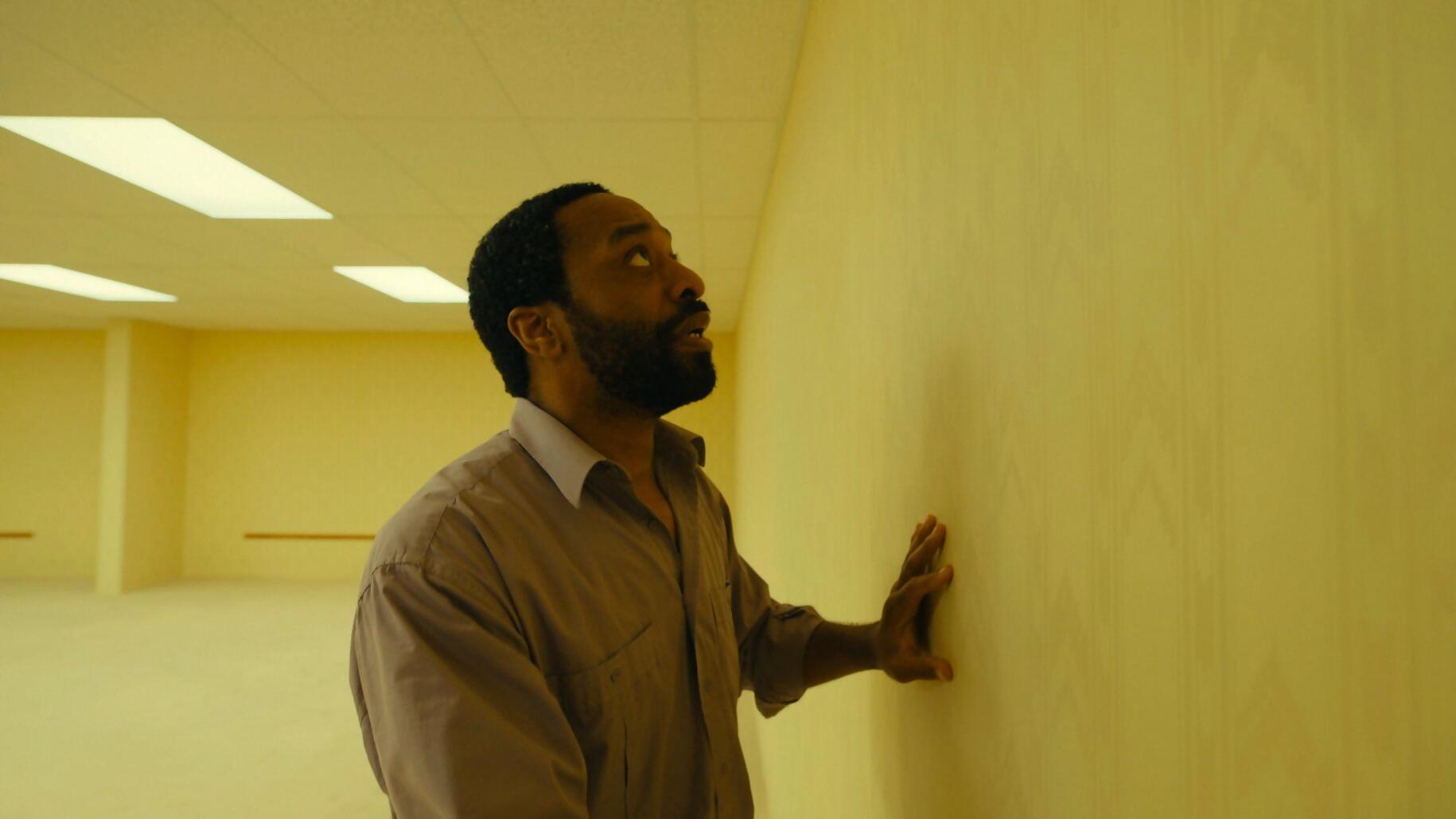
Backrooms, Kane Parsons’ debut feature for A24 which adapts his own hugely successful YouTube horror series, is a deeply weird exploration of everyone’s favourite term right now, ‘liminal space’. It also functions as a semi-arthouse character study. It’s not the film you might expect.
As someone new to the lore of the Backrooms series, I wonder how fans of Parsons’ – or Kane Pixels, as he’s known online – show might have parsed his big screen effort. Largely because while he does in places remain true to the spirit of the series visually, he displays admirable restraint in how little lore Backrooms exhibits. And there is a lot of lore.
Just to backtrack for a moment, it’s worth exploring briefly what underpins Backrooms, because many viewers who haven’t seen the YouTube series won’t have any clue as to the fact we know, or can infer, a great deal of what is happening in and around the background of Parsons’ film without it ever being mentioned. Over several years of short films, The Backrooms has evolved into a compelling mystery with a fascinating mythology.
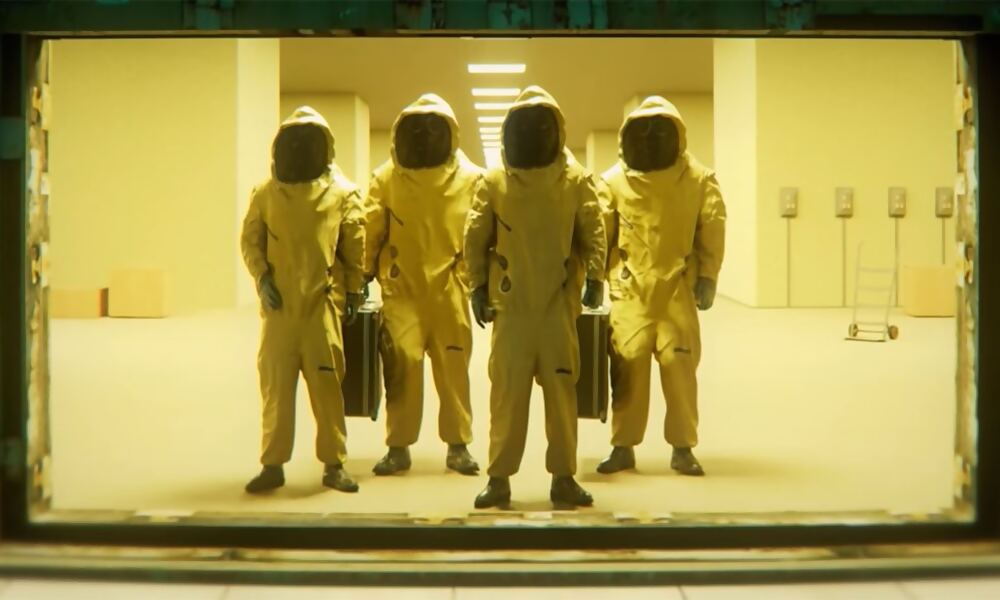
Put simply, the eponymous ‘Backrooms’ seem to have always existed as some kind of dimension that operates outside of our understanding of time and space. A-Sync, a company who trickle through Parsons’ film and whose logo we see emblazoned on the very first frame, went from building MRI machines to exploiting advances in quantum theory that saw them collide subatomic particles – something we learn in the film itself.. In 1989, they made ‘first contact’ with the space they called, among other things, the ‘Backrooms’.
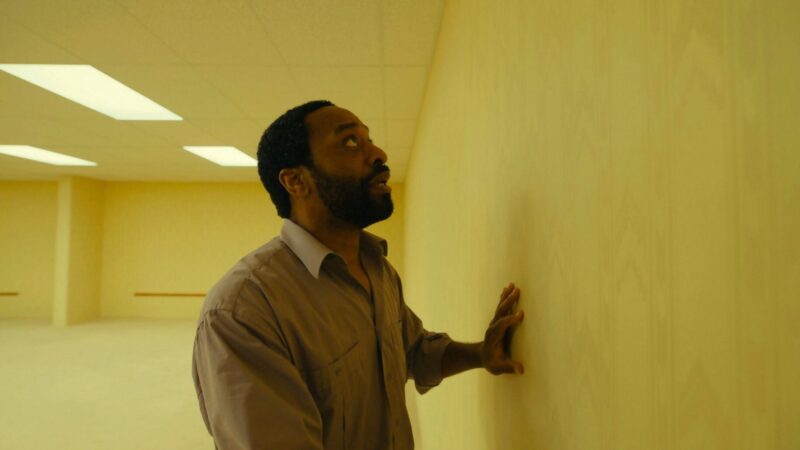
Across the first half of 1990, several months before the film is set, A-Sync begin exploring and mapping the complex of rooms that don’t fit, filled with furniture and odd ephemera, with the long-term goal of convincing the US government that the space can be applied as an infinite capacity for storage; indeed, they start planning for families to exist inside this dimensional space as a way to support a rising population.
More than a few teething troubles exist, however. People are starting to fall through cracks in time and space, or null zones as they are scientifically described, becoming lost in the ‘Backrooms’ and vanishing. Some are even being apparently consumed by a strange, inhuman monster that stalks the non-Euclidean corridors. There is also the strange bacteria growing in certain places; green translucent lights that apparently denote rooms changing their position; A-Sync workers getting lost and turning up months in the future; and even the fact entire towns and cities appear to be existing in this space.
In other words, there is a lot that the Backrooms film doesn’t show us, or frankly even hint at. The mythology combines the fusion of science and esoterica of Lost alongside the corporate experimentation of Fringe or Severance, with a good dose of conspiracy thriller built in. Parsons’ series is minimalist in approach, allowing audiences to theorise and fill in blanks (indeed some of the above hasn’t necessarily been canonically set in stone), focused first on a ‘found footage’ horror aesthetic designed to unsettle and confuse viewers.
This is perhaps why Parsons chose to avoid Backrooms becoming too ensconced within its own lore. Parsons originally got the idea from a ‘creepypasta’ image and post naming the maze of yellow rooms with fluorescent lighting as ‘Backrooms’ which he first saw on 4chan in 2019. Parsons was just 16 years old when he developed the first Backrooms short, and an organic development of the idea since 2022 has seen his videos receive over 75 million views. At just 20 years old, he’s phenomenally young for such an assured debut – one built on a dramatic centre about two rather broken people.
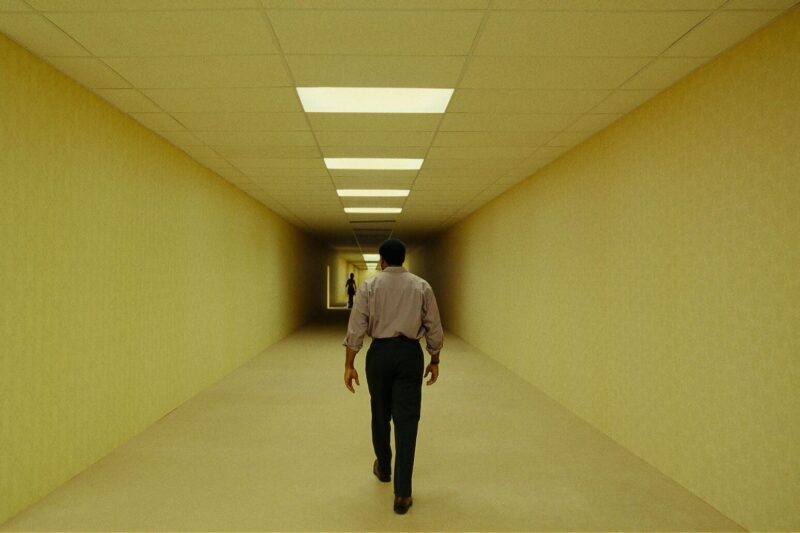
As he told Empire magazine: “It’s not someone behind the camera, you’re able to invest in an actual human, let that person experience things, and have the audience feel it by proxy.”
This isn’t to suggest found footage can’t deliver those kinds of intense emotions and narrative investment – just take The Blair Witch Project as proof – but The Backrooms was always about experience and atmosphere rather than any true sense of character. There are people important to the lore, such as on the run A-Sync possible whistleblower Peter Tench, but Parsons has avoided letting us know them as people, focusing instead on building the world and broader mythology of the ‘Backrooms’ itself.
Backrooms as a film logically broadens out the scope to allow viewers who aren’t au fait with the developing lore of the show to have the experience of Clark (Chiwetel Ejiofor) discovering a null zone inside the basement of his furniture store and venturing in. On that level, Parsons goes back to basics to reintroduce the concept for new audiences and focus on a linear narrative, as opposed to the short films that bounce around time and locations. It allows Backrooms to work functionally as a rather primal concept for a horror tale – hapless everyman trapped in an enclosed space – while those in the know can appreciate some of the finer details.
Though Parsons provides new characters with no previous connection to the mythology in Clark or his therapist Dr Mary Kline (played by Renate Reinsve), he does provide an answer to the strange monster figure that stalks people in the earlier videos (possibly!) and indeed seems to confirm the fan theory that the ‘Backrooms’ are in some way blending with our reality.

The core revelation, which aligns with the thematic ideas here around being trapped in behavioural loops that prevent us from forging new literal and emotional paths, is that the ‘Backrooms’ stores and remembers everything from the experience of those who visit, including copying them in grotesque fashion as monstrous beasts who consume and can be consumed.
Quite what the ‘Backrooms’ is, what it might become, and what that might mean, are questions for another day. Parsons fully intends to continue the YouTube series with its lo-fi approach, and given the initial box office success of Backrooms, we can be almost certain a second film or maybe a TV series will further evolve this concept.
Backrooms doesn’t end on a cliffhanger, but it certainly establishes a world constructed on a fascinating foundation of lore without the need to rely on it to tell a compelling and often deeply unnerving story. That makes it an exciting possibility as an ongoing horror franchise.
You can find A J. on social media, including links to his podcasts–including Modern Horror where he goes in depth on Backrooms–and books, via Linktr.ee here. Don’t miss him on the Film Stories Podcast Network too.