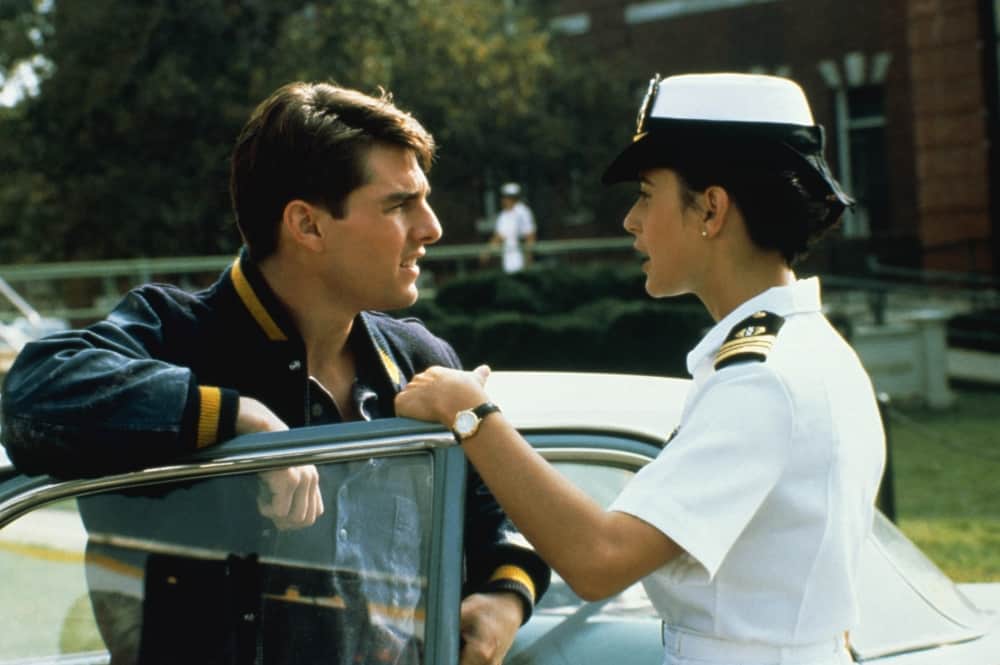
Rob Reiner’s 1992 courtroom drama gets so much right, it’s hard to know where to start. How about the title? It’s easy to forget, when talking about A Few Good Men, that one of the many things Aaron Sorkin’s script gets bang on is a bloody good title. Taken from “the oldest slogan associated with ... What’s in a name? Reading into the title of A Few Good Men
Rob Reiner’s 1992 courtroom drama gets so much right, it’s hard to know where to start. How about the title?
It’s easy to forget, when talking about A Few Good Men, that one of the many things Aaron Sorkin’s script gets bang on is a bloody good title.
Taken from “the oldest slogan associated with the U.S. Marine Corps”, the phrase first appeared on a recruiting advert in 1779, less than four years after the military outfit was founded. The idea of “the few” would reoccur in the force’s vision of itself in plenty of different guises over the next 200 years. “They stand on a wall,” Demi Moore’s Lt. Commander Joanne Galloway says in the film, “And they say ‘Nothing’s gonna hurt you tonight. Not on my watch.’”
As the film begins, we’re convinced Sorkin’s invocation of the phrase is ironic. Two Guantanamo Bay Marines – Lance Corporal Harold W. Dawson and Private Louden Downey – stand accused of murder. The case against them seems open and shut: the pair have confessed to carrying out a “Code Red” hazing ritual, to tying up a young recruit, gagging him and beating him until he chokes. The duo have confessed but, seeking to avoid dishonourable discharge and years in prison, insist on pleading not guilty. They are scum; strong preying on the weak and shirking the consequences.
And yet – they confessed, didn’t they? From the very start, Dawson and Downey’s plight seems impossible for Tom Cruise’s Lt. Daniel Kafee to understand. How can two men, faced with the irrefutable evidence of their crimes and their own confession, insist they acted in accordance with the code of conduct which evidently means so much to them. The moral absolutism of that old slogan is looking increasingly out of touch.
Later, the film takes away its title’s moral dimension entirely. Hadrian’s wall-style, the physical barrier between the naval base and the Cuban border is repeatedly invoked as a lone torch against the darkness. “Good” as an antonym of “evil” has no meaning there; what matters is that the job the Marines themselves are carrying out is a good one. As Jack Nicholson’s iconic Colonel Jessep famously says: “You want me on that wall – you need me on that wall… And my existence, while grotesque and incomprehensible to you, saves lives.”
Read More: Rob Reiner | Filmmaker has died, at the age of 78
These unhappy few aren’t good men in a moral sense. They carry out unspeakable acts so people like Lt. Commander Galloway don’t have to. Our “few good men” sacrifice their souls to keep the rest of America’s clean – in a strange way, they’re moral people precisely because they let the rest of the country think they aren’t.
But then in the years since A Few Good Men’s release, the meaning of those four words has changed again. Post-2002 and the establishment of the Guantanamo Bay detention centre, the base the film’s action revolves around has taken on a new, and much darker meaning in the public imagination. The phrase takes on a deeper level of irony when the men in question are accused of torture and civil rights abuses in the real world. The same film made today would inevitably take on a darker view of American imperialism than the plot could maybe withstand.
Not that the film itself shies away from this murkiness. It’s title could take on an irony of a different sort, questioning the very idea of “good” and “bad” men entirely. The case in which Dawson and Downey find themselves is knotty and morally complex. Could these be good men while having also done terrible things? Morality isn’t a binary, but a constant struggle between rights, wrongs and justice.
And yet the subsequent work of its creators – screenwriter Aaron Sorkin and director Rob Reiner – could change the title’s subject entirely. The good men might not be those anywhere near a wall, we wonder, but those who hold them to account.


A young Sorkin would carry the film’s ethos into his work on The West Wing: “It was the fantasy of having committed people, honest, committed, bright, energetic people doing what they felt was the right thing,” he told Charlie Rose in 2003. We can think of Lt. Kafee, Lt. Commander Galloway and Lt. Weinburg (Kevin Pollack), each ultimately attempting what’s best not just for their clients – but for the ideal of justice they strive to uphold.
All three make sacrifices. Kafee risks his career by challenging Jessep in court; Galloway spends every waking hour persuading the world to take the case seriously; Weinburg sacrifices his own instinct of right and wrong to uphold the greater justice of the law. Sorkin’s character template – of typewriter-talking Liberal Harvard-graduates – is often mocked online today. But his idealised view of America and its role in the world order might be just the kind of optimism a dark 2025 needs; all we need, the Trial Of The Chicago Seven scribe seems to say, is a few good people.
The same sentiment just as easily applies, in an even more concrete sense, to Reiner. A Few Good Men marked the end of the filmmaker’s now legendary first eight years as a director – years which produced This Is Spinal Tap then, in succession, Stand By Me, The Princess Bride, When Harry Met Sally and Misery.
But the years that followed put his films’ broad sense of optimism and moral duty to the test. Campaigner for same-sex marriage and against smoking, local environmentalist and Trump critic, Reiner seemed to embody the call for moral endeavour his heaviest film shouted from the rooftops.
Like much of Sorkin’s work, through it all Reiner seemed to remain optimistic – hopeful that the America he saw in his films could be made a reality. As producer of his 2024 documentary, God And Country, which sought to highlight the hypocrisy of the Christian nationalist movement, he told The Guardian: “We need to reach as many people as we can.” Being good was not a virtue, but an act – one reaffirmed each and every day.
Rob Reiner, it seems, was a good man. And I don’t think he’d believe he was one of the few.