There have been three versions of Close Encounters Of The Third Kind released so far. But is one cut better than the other? We take a look. NB: The following contains spoilers for Close Encounters Of The Third Kind. Before the 1970s, director’s cuts and expanded releases were comparatively rare. Charlie Chaplin re-released his silent ... Close Encounters Of The Third Kind | Comparing its three different cuts
There have been three versions of Close Encounters Of The Third Kind released so far. But is one cut better than the other? We take a look.
NB: The following contains spoilers for Close Encounters Of The Third Kind.
Before the 1970s, director’s cuts and expanded releases were comparatively rare. Charlie Chaplin re-released his silent film The Gold Rush with sound in 1942. Sam Peckinpah’s controversially harsh 1969 western The Wild Bunch was eventually re-released with 10 minutes of cut footage put back in, but that wasn’t widely available until the mid-1990s.
In 1977, however, the astronomical box office success of Close Encounters Of The Third Kind put writer-director Steven Spielberg in a unique position: he was given what was then a rare opportunity to revise his own film after it had been released.
Shortly before the Close Encounters’ initial premiere, Columbia Pictures had demanded that Spielberg rush his science fiction fairy tale into cinemas to capitalise on the surprise success of Star Wars. At first, Spielberg tried to insist that he needed another six months to finish the edit; Columbia, already reeling from Close Encounters’ wildly overrunning budget, dug its heels in. They wanted it in cinemas before Christmas.
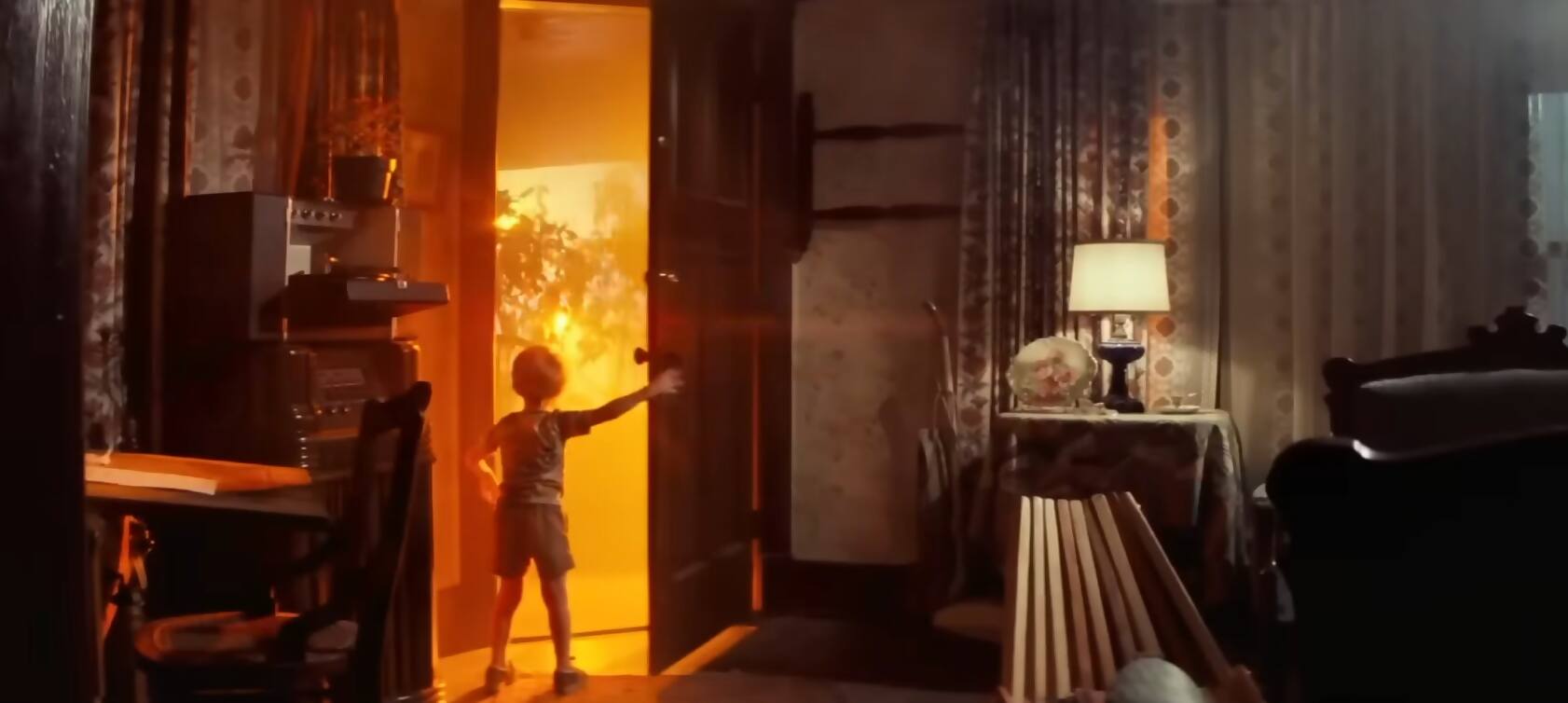
Close Encounters appeared in American cinemas in November 1977 and went on to become the third biggest hit of that year. The excitement surrounding the film was such that, within months of that release, Spielberg was already working on an “expanded version” of his UFO epic, initially set to release in mid-1979.
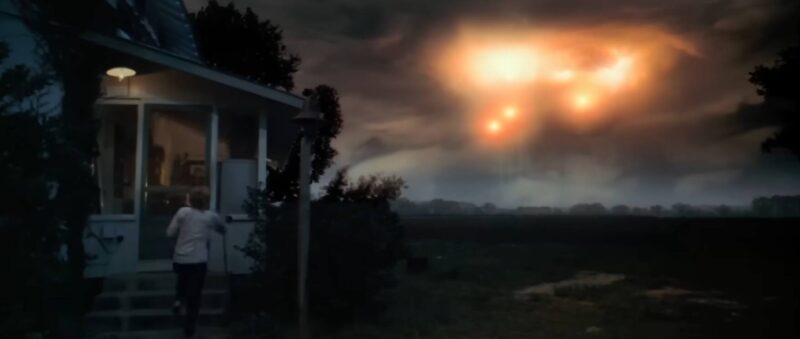
Talking to Starlog magazine in February 1978, Spielberg talked about overseeing a new cut that put reintroduced scenes that were trimmed out of the original release, as well as shooting new sequences that he said were in his script but went unfilmed during production.
“They’re scenes I couldn’t afford to shoot because of budgetary reasons,” Spielberg said. “I was unable to convince Columbia to okay them.”
These scenes eventually went into the Close Encounters Special Edition, which came out slightly later than initially planned in August 1980. Columbia gave Spielberg roughly $1.5m to shoot his additional sequences, which included the discovery of an ocean freighter in the Gobi desert and a scene in which Richard Dreyfuss’ protagonist Roy Neary marvels at the interior of an alien craft.
At the same time, Spielberg added one or two dramatic scenes and snipped other moments out, resulting in a cut that was actually slightly shorter than the first theatrical release (132 minutes versus the original’s 135 minutes).
The Special Edition performed well at the time, such that it pushed Close Encounters’ total box office takings over the $300m mark. For years, it was also the only version available on VHS. It was in the late 1990s, when Spielberg worked on what was released as the Director’s Cut, that he began to express regret about the Special Edition – specifically, the addition of the scene inside the alien mothership.


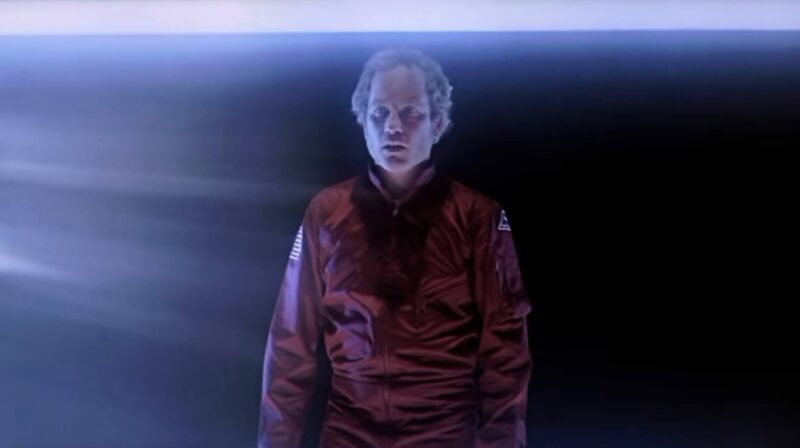
In a making-of documentary made by Laurent Bouzereau for the 2001 Collector’s Edition release, Spielberg said that Columbia gave him the $1.5m to make the 1980 reissue on the condition that he shoot a scene that takes audiences inside a UFO.
“’Give us something to hang the campaign on’,” Spielberg recalls an executive saying. “So I compromised and had Richard Dreyfuss walking onto the mothership, which I never should have done. It should always have been a mystery, the inside of that ship.”
This was far from the first time that Spielberg changed his mind about certain scenes in Close Encounters. Looking back through old interviews, we can see how Spielberg’s attitude to his film and certain sequences within it changed markedly over time.
Speaking to Cinefantastique in the autumn of 1978, Spielberg was talking enthusiastically about his plans to make a direct sequel to Close Encounters. When asked about the scene involving the discovery of the huge ocean freighter in the Gobi desert in the original film, Spielberg said that it was surplus to requirements, and an idea he planned to put in Close Encounters 2 (or Night Skies, as it was called for a time). Instead, the sequel went unmade and he put the freighter sequence in the Special Edition.
Spielberg also highlighted a scene in which Roy Neary, in the middle of a breakdown, is found alone and crying in a bathroom. This then builds to a tumultuous argument between Roy and his wife, Ronnie (Teri Garr). The scene was in an earlier rough cut, but was trimmed out by the time Close Encounters reached cinemas.
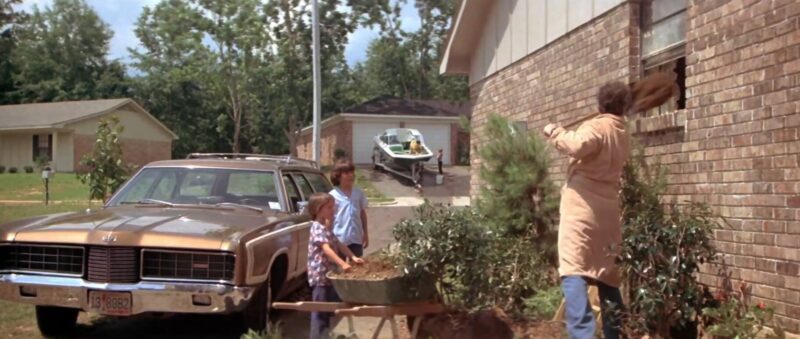
When asked why, Spielberg said, “It was self-defeating. It was such a strong scene, and so shattering, that it needed three or four moments after it was over to allow Neary to pick up the pieces… It would have been highly recognised as Dreyfuss’ best scene, and cosmically out of place in the picture.”
Months later, Spielberg had changed his mind – the scene was one of several moments of drama added to the Special Edition.
Other scenes were, however, snipped out of the reissue – the sequence where Roy’s shovelling dirt and bricks through his kitchen window to build his Devil’s Tower diorama was shortened. Also gone: a scene at Roy’s workplace, which establishes the nature of his job as a lineman and the power outages spreading across the local area.
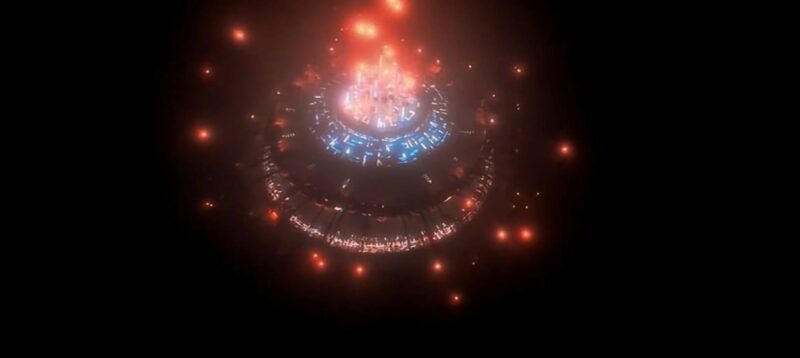
The big addition was, of course, that brief shot of the mothership’s interior. Considerable time and effort was put into realising its practical effects, and Richard Dreyfuss was brought back to film a beatific reaction shot (you can see that his hair looks quite different from earlier scenes). Viewed in retrospect, it’s an uncomfortable fit; the scene’s addition disrupts the flow of the editing, and there are curious cuts back to reaction shots of smiling characters who have no way of seeing what Roy’s seeing.
There’s also a change to the soundtrack that is either cute or distracting depending on your mood: an orchestral quote from When You Wish Upon A Star. One of the film’s several allusions to Pinocchio, it’s a piece of music Spielberg had initially put at the end of the theatrical cut, but opted to remove following a mixed response from test audiences. In his interview with Cinefantastique in 1978, Spielberg said, “I’m going to try something interesting. When Close Encounters is re-released a few years from now, I’m going to put When You Wish Upon A Star back in. Cuz at that point, I got nothin’ to lose.”
Twenty years later, the 1998 Director’s Cut saw Spielberg reverse those changes to the ending. We see Roy Neary disappear into the blinding light of the mothership’s belly, John Williams’ original score lifts us into the heavens, and the ship’s interior again remains a mystery.
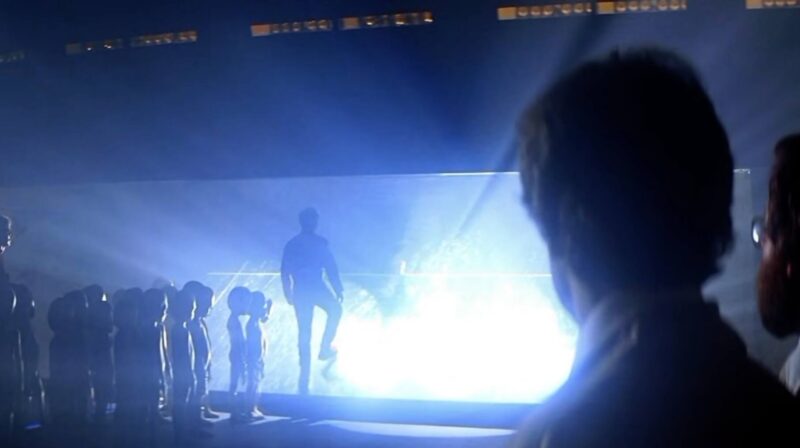
Otherwise, the Director’s Cut is broadly the same as the Special Edition, and is also the longest cut released to date at 137 minutes. But there are still moments in the original theatrical release that aren’t in this later, expanded version: the scene at Roy’s work (a sequence that has a texture I always liked) is still missing.
Carl Weathers is listed in the end credits, but the scene where he appears as a border official is also missing. There are numerous other trims, too – far too many to list here – that you can find listed on movie-censorship.com.
What’s striking about these three cuts is that the film remains consistently brilliant in each. The 1977 theatrical version of Close Encounters certainly wasn’t terminally compromised by studio interference, as the 1982 release of Blade Runner was. Sure, the Special Edition’s mothership tour marrs the ending, but it doesn’t sink the film; other additions, like the moments of family drama and the discovery of the SS Cotopaxi freighter, expand on the story’s scale and emotion. For this writer, they’re an improvement on the theatrical cut.
Nor does the Director’s Cut take a classic film and add more flaws than there were to begin with. It isn’t like Spielberg’s 2002 tinkering with E.T. The Extra-Terrestrial, where Carlo Rambaldi’s creature effects were replaced with CGI and all glimpses of guns were infamously replaced with walkie-talkies. Spielberg later admitted that he’d “lived to regret” those changes.
Speaking 20 years later, Spielberg said that, revisiting Close Encounters, he saw it as the work of a younger, more naive director. “I see a very sweet, idealistic odyssey,” he said. “In 1997, I would never make a film like Close Encounters, because I have a family that I’d never leave… when I look at Close Encounters, it’s the one film I think that dates me.”
Together, the three cuts of Close Encounters tell a story by themselves: of a young filmmaker navigating his way around an expensive and complicated production, balking at some sequences then changing his mind; making compromises, conceding to some studio demands and later walking those changes back.
But in all three cuts, Close Encounters remains a masterpiece. There’s an argument that the pace lags here and there in all of them, and that there are elements of the theatrical cut that are better than the Director’s Cut and vice versa, but the film’s humanistic, awe-struck tone remains intact in both.
Movies are the result of a million creative conversations and choices, and Close Encounters is an example of how the addition of even one extra scene can change a story’s tone and flow. But Spielberg’s film also proves that, if a story’s core is strong enough, it can be subjected to all kinds of trims and edits, but its brilliance will still shine as brightly as a mothership against a night sky.