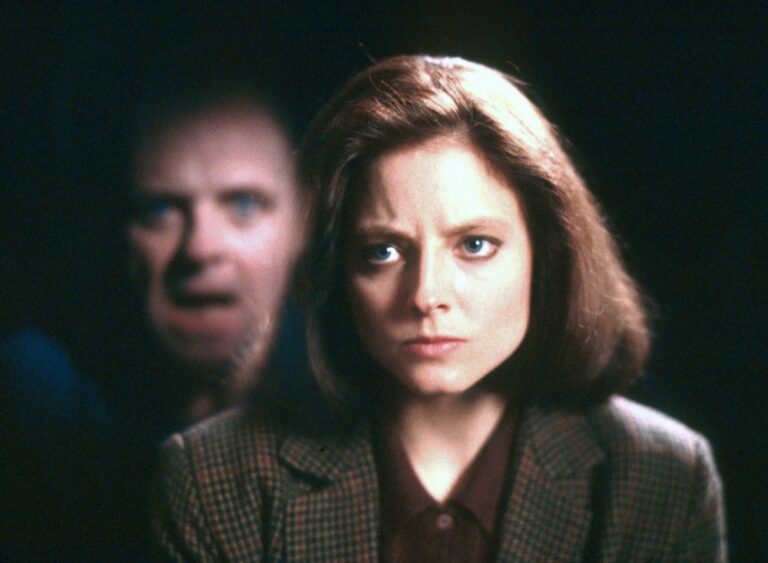
35 years ago, The Silence Of The Lambs ushered in a fascination with serial killers that informed cinema for years afterwards. If you’re of a certain age, you may remember the hype. Stories of audiences being so unsettled by Anthony Hopkins’ performance that they physically recoiled in their cinema seats during his closeups. The Silence ... The Silence Of The Lambs | Its impact on pop culture, 35 years on
35 years ago, The Silence Of The Lambs ushered in a fascination with serial killers that informed cinema for years afterwards.
If you’re of a certain age, you may remember the hype. Stories of audiences being so unsettled by Anthony Hopkins’ performance that they physically recoiled in their cinema seats during his closeups.
The Silence Of The Lambs opened in UK cinemas in June 1991 – four months after it premiered in the US, which meant that movie-goers on these shores had already heard about the ecstatic reviews, its success at the box office, and the magnetic quality of Hopkins’ performance as incarcerated serial killer and former psychologist, Hannibal ‘The Cannibal’ Lecter.
Director Jonathan Demme’s film wasn’t billed as horror, but the genre’s overtones are all over it: the Gothic set design, uneasy cinematography and flashes of gore all make The Silence Of The Lambs as much a celluloid nightmare as it is a traditional catch-the-killer thriller.
The performances, which also includes Jodie Foster’s as rookie FBI agent Clarice Starling, were rightly praised (and later, garlanded with Oscars). But the way Demme, in tandem with cinematographer Tak Fujimoto, captures those performances adds immensely to their power. Demme’s style – of faces in tight closeup, often appearing to gaze down the lens right back at us – was the perfect fit for a story that is partly about seeing and objectification.
As Lecter himself puts it, “We begin by coveting what we see every day.”

This perfect amalgam of performance, filmmaker and material made The Silence Of The Lambs one of the biggest hits of 1991, and the most acclaimed horror film since The Exorcist 18 years earlier, with seven Oscar nominations and five wins, including Best Director and Best Picture. (The Exorcist garnered 10 nominations and two wins, but didn’t win the Best Picture prize – that went to The Sting.)
Audience fascination with serial murderers was such that studios began dredging up older films that had been previously overlooked. Director John McNaughton’s disturbing low-budget drama-thriller Henry: Portrait Of A Serial Killer struggled to find a distributor in the mid-80s, and the grim nature of the film meant it was barely seen for the rest of the decade outside the festival circuit.
The MPAA’s refusal to give the film anything below an X rating didn’t help matters; when Henry emerged in the UK, the BBFC was similarly horrified, and several seconds of cuts were made before the film was granted an 18 certificate in 1991. The film soon became regarded as a cult classic all the same.
Coincidentally, 1986 saw another disturbing thriller emerge: Manhunter. Directed by Michael Mann, it was, like The Silence Of The Lambs, adapted from a novel by author Thomas Harris. The original book was called Red Dragon, but the adaptation’s producers were fearful that movie-goers might mistake it for a martial arts film, and gave it the less distinctive Manhunter title instead.
Mann’s eerie film was largely ignored on its initial release, meaning that far too many people missed a thriller that was, in many respects, The Silence Of The Lambs’ unholy, equally brilliant cousin. It too was about an FBI investigator on the trail of a serial killer, and who briefly consults with the caged Hannibal Lecktor (the character’s spelling here) during the course of the hunt. Here, it was Brian Cox as a more callous, frighteningly smart Hannibal, and William Peterson as the protagonist.


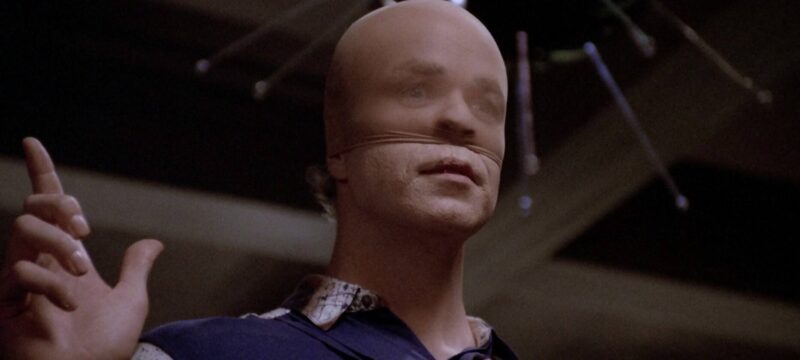
Read more: In Manhunter, Tom Noonan created one of the great screen villains
It was the global fascination with Demme’s film that helped lift Manhunter out of obscurity. This began quite early in the UK; Manhunter was first screened in August 1991, mere weeks after The Silence Of The Lambs made its debut in British cinemas. Shown late on a Sunday night as part of BBC Two’s Moviedrome season, presenter Alex Cox listed numerous parallels between it and Demme’s film, confidently stating his opinion that the latter is the superior of the two. (“Michael Mann is the creator of Miami Vice, and an incorrigible fadist…”)
Nevertheless, Manhunter’s reappraisal as a cult classic, certainly in the UK, arguably began here, and only grew in the new millennium.
Critic Barry Norman noted all the serial killer thrillers that emerged after The Silence Of The Lambs on his Films Of The Year special, which aired that December. “The cinema this year seems to have found itself morbidly fascinated by the phenomenon of the serial killer,” Norman said, before adding that the early 90s crop of thrillers were rather more seriously intentioned than the slashers that sprung up the previous decade.
He noted the recent release of the French thriller Docteur Petiot and Henry: Portrait Of A Serial Killer, which were both loosely based on real-life murder cases, before throwing in a nod to the somewhat less serious Fear, in which Ally Sheedy played a psychic who specialises in tracking down mass murderers. “But the most effective and most spectacular specimen of the genre was the totally fictional The Silence Of The Lambs,” Norman declared.
In truth, Thomas Harris was heavily inspired by real cases when he wrote his original books. Before he wrote Red Dragon, published in 1981, he did a great deal of research into the FBI’s Behavioral Science Unit, which then was little more than a decade old. Interviewing several agents at the unit, including Robert Ressler and John Douglas, he gained an insight into a relatively new field of investigation: criminal profiling.
The notion of an FBI agent interviewing an imprisoned killer to help with an investigation originated during the course of that research; Ressler and Douglas interviewed 36 serial murderers in the 1970s, with the information subsequently used to create a framework for how other killers thought and behaved. Although heavily fictionalised, the killers in Thomas Harris’ novels shared several parallels with real-world criminals, including Dennis Rader, Ed Gein and Ted Bundy.
In terms of its mark on pop culture, The Silence Of The Lambs was perhaps the most consequential publishing and film phenomenon of its era. Both the book and the movie affected audience tastes for years afterwards, prompting a wave of lurid true crime documentaries and non-fiction books. TV shows about detectives on the trail of killers with their own distinctive modus operandi sprung up all over the place. And, of course, so did all the other copycat serial killer movies – including one called Copycat, released in 1995.
That same year, the young filmmaker David Fincher, who’d considered quitting the business altogether after the excruciating production of his debut Alien 3, made his own thriller in the Silence Of The Lambs mode. Written by Andrew Kevin Walker, Seven was, if anything, as pivotal to the look of modern thrillers as Demme’s was. Its bone-chilling, nihilistic tone and shadowy cinematography informed the look of movies for decades afterwards. As with Silence Of The Lambs, Seven’s concept of a murderer with a grand design to his crimes was also co-opted by dozens of movies and TV shows of varying quality.
Bringing the inspiration full-circle, Fincher executive produced and largely directed the Netflix TV series Mindhunter, about the FBI’s Behavioral Science Unit in the late 1970s. In other words, it was the story about the research and investigations that inspired Thomas Harris to write Red Dragon and The Silence Of The Lambs all those years earlier.
But while it has long been praised for its feminist overtones and dissection of the male gaze, Demme’s film has also been criticised for its handling of other gender issues. Specifically: its depiction of Buffalo Bill (Ted Levine), a killer who wears the skins of his female victims. That the character is described as a “transexual” who “hates his own identity” was condemned by LGBTQ groups at the time of release – Queer Nation and ACT-UP even protested outside the Academy building on Oscar night – and accusations of transphobia have only grown since.
Before his death in 2017, Demme insisted that Buffalo Bill wasn’t intended to “have a sexual preference,” but did concede that “more and more people, me included are starting to wake up to the challenge” facing the transgender community.
Ted Levine was similarly contrite. Speaking to The Hollywood Reporter, he acknowledged that “There are certain aspects of the movie that don’t hold up too well,” adding, “I’m a lot wiser about transgender issues.”
Producer Edward Saxon, speaking to the same outlet, also said, “From my point of view, we weren’t sensitive enough to the legacy of a lot of stereotypes and their ability to harm.”
Although hardly without blemish in terms of its attitudes and themes, The Silence Of The Lambs’ cultural impact can still be felt today. Writer-director Oz Perkins’ Longlegs, released in 2024, consciously drew on that earlier film’s legacy – right down to its FBI agent protagonist. Meanwhile, showrunner Bryan Fuller still wants to make a fourth season of his Hannibal series, which originally ran from 2013 to 2015, and there are rumours that Universal plans to make a new movie about Lecter.
35 years on, and the lambs still haven’t stopped screaming.