In 1992, the fate of Blade, Spider-Man, Hulk, Black Panther, Ghost Rider and more on the big screen was looking very different… As this piece is being written, the official Marvel Cinematic Universe – or MCU, to its mates – extends to 37 released films, with a bunch of television series as well. Several more ... The state of the Marvel Cinematic Universe – from a 1992 article!
In 1992, the fate of Blade, Spider-Man, Hulk, Black Panther, Ghost Rider and more on the big screen was looking very different…
As this piece is being written, the official Marvel Cinematic Universe – or MCU, to its mates – extends to 37 released films, with a bunch of television series as well. Several more movies are imminent, with new Spider-Man and Avengers features due on the big screen in 2026. Anything less than a billion dollar gross for each of those will be regarded as a commercial disappointment.
But then modern Marvel is big business. Over $32bn has been banked at the box office to date, and even as recent films have stuttered, it’s still arguably the biggest big screen franchise in town (sorry, Vin.)
Yet go back to 1992, and things were very different. At that stage, there were nine feature films at various stages of development, yet they were split across different studios. This was Marvel at its moment of financial paucity, selling the screen rights to it characters in deals that still affect the Spider-Man and Hulk sagas to this day.
There’s a vintage piece over at Variety here that examines the slate as it stood then. 34 years later, it’s interesting to note just what happened to the assorted projects on the list…
SPIDER-MAN
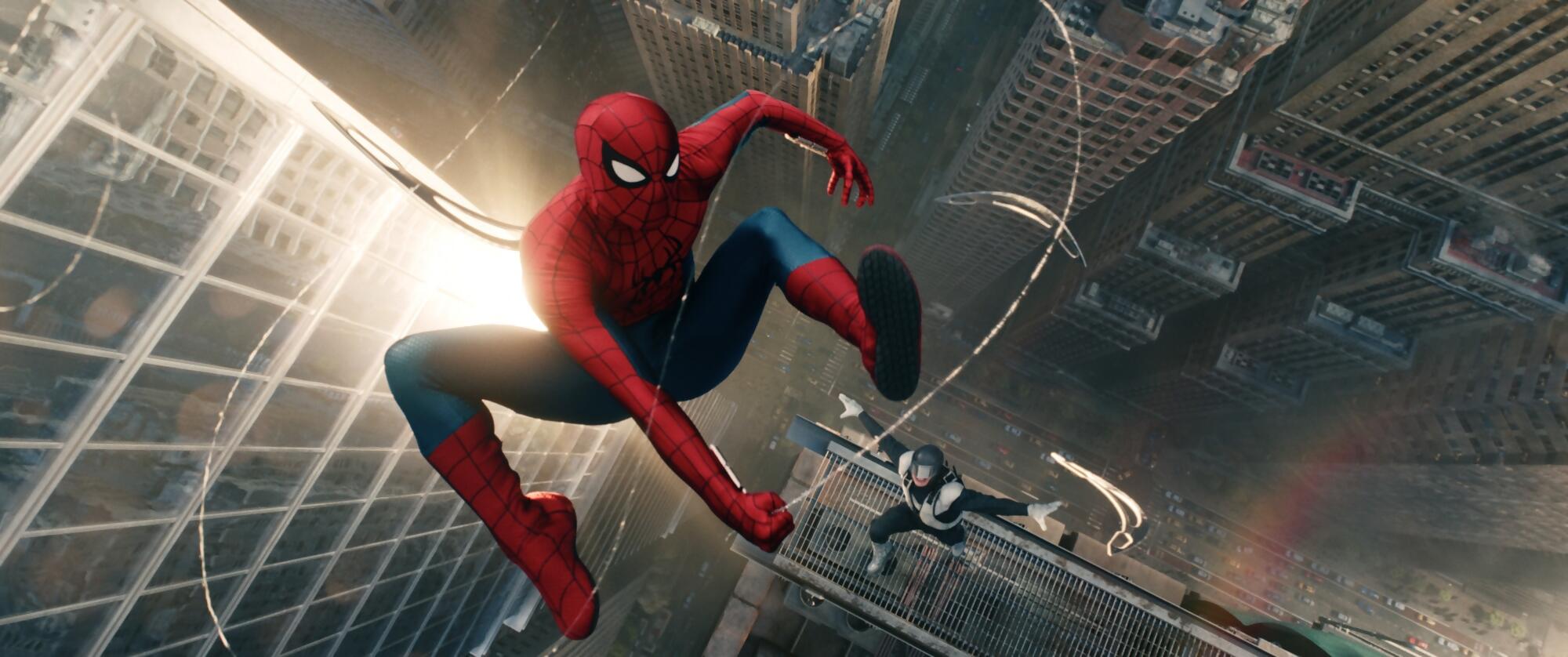
It took a long, long time to untangle the web (sorry) of Spider-Man rights, and for much of the 1990s, it was expected that James Cameron would eventually be able to direct the film. A $60m budget was mooted and at one stage Arnold Schwarzenegger was being mooted to play Doctor Octopus for him. In 1992, Cameron looked in pole position, certainly.
Legendary indie company Carolco, behind hits such as Total Recall, Terminator 2: Judgment Day and Basic Instinct, was keen to reunite with Cameron to make the film. But when it hit financial choppy waters in the early- to mid-1990s, so Spider-Man got even more muddled. “Carolco chairman Mario Kassar remains determined to produce the pic”, noted Variety, but it wasn’t to be. It’d take ten years for Spider-Man to make it to the big screen, with Carolco, James Cameron and Arnold Schwarzenegger nowhere near it. Instead, Sony snapped up the rights, Sam Raimi was hired to direct, and you more than likely know the rest…
BLACK PANTHER
In 1992, it was the Sony-owned Columbia Pictures that had the rights to make a film based on Black Panther, and the conversations at the time were developing it as a vehicle for Wesley Snipes. He got as far as having conversations with the studio, but eventually he’d opt to make Blade with New Line Cinema instead (coming to that shortly). Columbia/Sony would never get Black Panther off the ground, and the character made his debut as part of Marvel Studios instead – to resounding success.
ELEKTRA

Suggested product
Issue #61 (Horror Special): Magazine + Signed Ben Wheatley F&TT&N: Issue #4 (Reprint)
£14.99

Interesting one, this. The assumption was that Daredevil was of more instant interest to Hollywood, yet it was initially the Elektra character that looked more primed for the big screen. The pair, famously, are in a relationship in the comics. Fox had the rights for a live action television series of Daredevil, but Elektra Assassin was attracting he interest of Oliver Stone to direct. Never happened of course, and instead, Fox got the rights. It went for a Daredevil movie first, before Jennifer Garner finally got to bring Elektra to the screen in 2005.
GHOST RIDER
There were two unnamed studios in competition for the rights to bonfire biker Ghost Rider back in 1992. No personnel were linked to the proposed film. It’d take five years before Gale Anne Hurd joined as producer, and then the film was going through independent companies rather than studios. Johnny Depp was mooted to star towards the back end of the 1990s.
In the end, Sony would land the movie, with Nicolas Cage taking on the lead role, a character who he’d been a huge fan of. Eventually, the first of two movies shuffled out in 2007, 15 years after the initial Variety article.
CAGE
To date, Luke Cage hasn’t been the star of a Marvel feature film, but he has been played by Mike Colter across a couple of series on Disney+. Back in 1992, producer Ed Pressman, he of films such as Wall Street, Reversal Of Fortune and Bad Lieutenant, had picked up the rights (he’d also produced The Crow, which landed in 1994.)
Pressman hired Kit Carson to pen a script, that was ready to go at the back end of 1992. Quentin Tarantino had a conversation about making the film, possibly with Laurence Fishburne in the lead role. But QT opted to make Pulp Fiction, and Cage never happened. Ed Pressman passed in 2023.
DOCTOR STRANGE
Now this would have been interesting. The eventual Doctor Strange films that we got both attracted horror directors, with Scott Derrickson making the first and Sam Raimi the second. But in 1992, Savoy Pictures had got the rights to the character, and was trying to get Wes Craven to write and direct the picture. What scuppered this was that the rights weren’t quite as straightforward as hoped. Instead, Craven directed his energies to Wes Craven’s New Nightmare, which in turn led to the Scream movies. Guillermo del Toro was also linked to Doctor Strange at one point, but the first movie wouldn’t arrive until 2016 in the end.
HULK

This is the only one on the original Variety list that actually got made with the studio that was linked to it.
In 1992, Universal Pictures was looking to do a deal to bring the Incredible Hulk to the screen, and in 2003, it actually managed to do so. I adore Ang Lee’s much-maligned eventual film, starring Eric Bana, but the deal done here – and the subsequent partnership between Universal and Marvel for 2008’s The Incredible Hulk sort-of-reboot – means that Marvel to this day can’t release a standalone Hulk movie. At least not without offering Universal some distribution rights, and that ain’t going to happen. It’s why we ended up with a Thor/Hulk two-hander in Thor: Ragnarok instead.
FANTASTIC FOUR
An infamous moment in the history of superhero comic book movies. At the stage the Variety article was written in December 1992, plans were very much afoot to shoot a live action Fantastic Four feature. Neue Constantin film had the rights, but had to get production moving if it wanted to retain them. As detailed in this podcast episode here, what eventually happened was that the movie was indeed shot, and promptly put on the shelves, with no intention of releasing it. The wording of the contract was such that this satisfied the terms of the deal. It’d ultimately be in vain though as a) the film leaked out and b) it was 20th Century Fox who would finally acquire the rights, and get three Fantastic Four films made.
X-MEN
Sony was also snooping around a possible deal for the X-Men characters, and got to the “early discussions” stage with Marvel about an ensemble live action film. There was already an animated series at this stage ready to go on the small screen, that Fox was airing to great success. A live action movie wouldn’t follow until 2000, and it’d be Fox in the end that inked the deal for the characters. They’d only revert to Disney/Marvel when the Mouse bought out Fox at the back end of the 2010s.
BLADE
Lastly on the movie list was Blade, which would end up on the big screen quicker than any other project listed here. That said, the casting would alter. In 1992, it was LL Cool J (the LL, memorably, standing for ‘ladies love’). Jet Li was in the running for the role of Deacon Frost as well, but would opt to do Lethal Weapon 4 opposite Mel Gibson and Danny Glover instead. New Line Cinema would opt for Wesley Snipes for the title role in Blade ultimately, the first movie landing in 1998. It was rewarded with a trilogy of films, and since then, efforts made by Marvel to reboot it have not been successful.
LL Cool J would turn up in B*A*P*S and Deep Blue Sea instead. Fine choices, both…
And finally.
There were television projects listing in the article too. The aforementioned X-Men TV series is the obvious standout, but also, Paramount was looking at a Tomorrow Man live action series, while producer Lewis Chesler wanted to bring Black Widow to television as well.
—
Much has changed, obviously, since 1992. But it’s an interesting fork in cinema history. Had more of these got off the ground back in the 1990s, blockbuster cinema may just have gone down a very, very different path…