Pirates Of The Caribbean director Gore Verbinski says that the use of Unreal Engine to create VFX shots has resulted in a “slip backwards” for filmmaking. With the likes of the Pirates Of The Caribbean movies and Rango behind him, director Gore Verbinski knows a thing or two about using CGI to tell stories. The ... The use of Unreal Engine has resulted in a “gaming aesthetic entering cinema” says Gore Verbinski
Pirates Of The Caribbean director Gore Verbinski says that the use of Unreal Engine to create VFX shots has resulted in a “slip backwards” for filmmaking.
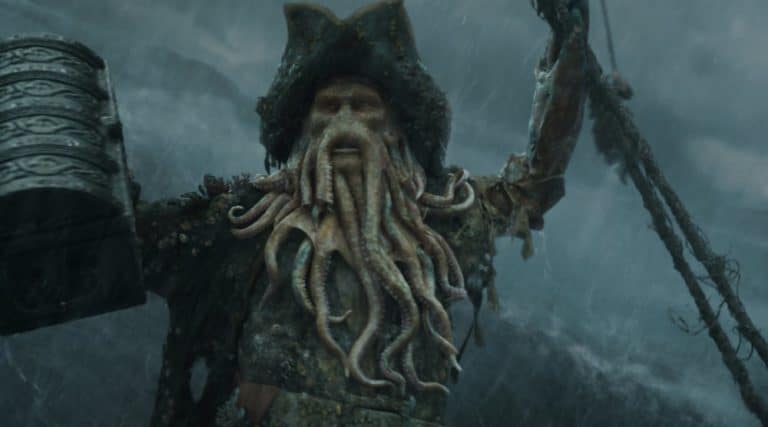
With the likes of the Pirates Of The Caribbean movies and Rango behind him, director Gore Verbinski knows a thing or two about using CGI to tell stories. The tentacle-faced villain Davy Jones in the Pirates franchise (as played by performance-captured Bill Nighy), to name one example, is widely regarded as a high water mark of VFX.
So when Verbinski’s asked what he thinks about the current state of visual effects in movies, you can bet he has an opinion on the subject. And that’s exactly what But Why Tho did late last year, as Verbinski premiered Good Luck, Have Fun, Don’t Die – his first film in over a decade – at Fantastic Fest. The filmmaker’s comments have only recently come to wider attention as they’ve filtered to other outlets; a hat-tip to VGC for bringing them to our attention.
Simply put: Verbinski cites the film industry’s growing use of Unreal Engine as one of the main reasons why visual effects haven’t progressed particularly far since the Pirates movies of the 2000s. Originally conceived as a videogame engine, Unreal has since been adopted by filmmakers, with the software used in the likes of The Mandalorian, The Matrix Resurrection and Guardians Of The Galaxy Vol 2 in some capacity – often for the creation of real-time digital environments.
According to Verbinski, however, the introduction of Unreal has brought with it a “gaming aesthetic in the world of cinema.”
“I just don’t think it takes light the same way,” Verbinski said. “I don’t think it fundamentally reacts to subsurface, scattering, and how light hits skin and reflects in the same way. So that’s how you get this uncanny valley when you come to creature animation, a lot of in-betweening is done for speed instead of being done by hand.”
He also added that the increasing use of Unreal over more established software like Autodesk Maya represented a “slip backwards” for the industry as a whole.
“I think that Unreal Engine coming in and replacing Maya as a sort of fundamental is the greatest slip backwards,” he said “And there’s also something, a mistake I think people make all the time on visual effects. You can make a very real helicopter. But as soon as it flies wrong, your brain knows it’s not real. It has to earn every turn; it has to move right. It’s still animation, sometimes it’s not just the lighting and the photography, sometimes it’s the motion.”
Since then, a VFX supervisor at Epic Games – the company behind Unreal – has responded to Verbinski’s remarks.
“It’s inaccurate for anyone in the industry to claim that one tool is to blame for some erroneously perceived issues with the state of VFX and CGI,” Epic’s Pat Tubach told VGC. “It’s true that there are a lot more people making computer graphics than ever before, and with that scale comes a range of successes and failures – but aesthetic and craft comes from artists, not software.”
Tubach is himself a VFX industry veteran, having worked at ILM for over two decades – and at least two Pirates Of The Caribbean movies – before moving to Epic in 2022.


“I can guarantee that the artists working on big blockbuster VFX films like Pirates Of The Caribbean 10-15 years ago could only dream about having a tool as powerful as Unreal Engine on their desks to help them get the job done,” Tubach said. “And I should know – I was one of them.”
Good Luck, Have Fun, Don’t Die is due for release in UK cinemas on the 20th February.