Multiple companies have merged with Warner Bros since 2000, and all have been disastrous to one degree or another. We take a look back. If you choose to believe Paramount, its planned buyout of Warner Bros will be a Good Thing for everyone involved. The merger, the company said in a recent statement, will result ... Warner Bros | A brief history of terrible mergers
Multiple companies have merged with Warner Bros since 2000, and all have been disastrous to one degree or another. We take a look back.
If you choose to believe Paramount, its planned buyout of Warner Bros will be a Good Thing for everyone involved.
The merger, the company said in a recent statement, will result in a new, bigger outfit that “can greenlight more projects, back bold ideas, support talent… and bring stories to audiences at a truly global scale.”
On the other side of the argument are the 1,400 (and counting) signatories to an open letter, countering that the devouring of yet another Hollywood studio will further reduce the number of movies being made each year and the job opportunities that go with them.
Among the famous names signing that 13th April letter were actors Bryan Cranston, Emma Thompson and Mark Ruffalo, as well as respected filmmakers like David Fincher, Celine Song and Denis Villeneuve.
The other question, put forward by journalist Karl Bode, is why Paramount Skydance (to give the company its full name) would want to merge with Warner Bros in any case. As Bode points out, there have been multiple mergers since 2000, and those deals have resulted in billions of dollars in losses and, worse, thousands of lost jobs.
Two of these mergers are now regarded as some of the worst deals in US history. The jury’s still out on the most recent merger, between Warner and Discovery, but from our standpoint in 2026, the only real victors appear to be CEO David Zaslav and suited execs like him.
Without getting too bogged down in spreadsheets and headache-inducing business jargon, here’s a brief look at each of these deals – and the horrendous impact each left behind.
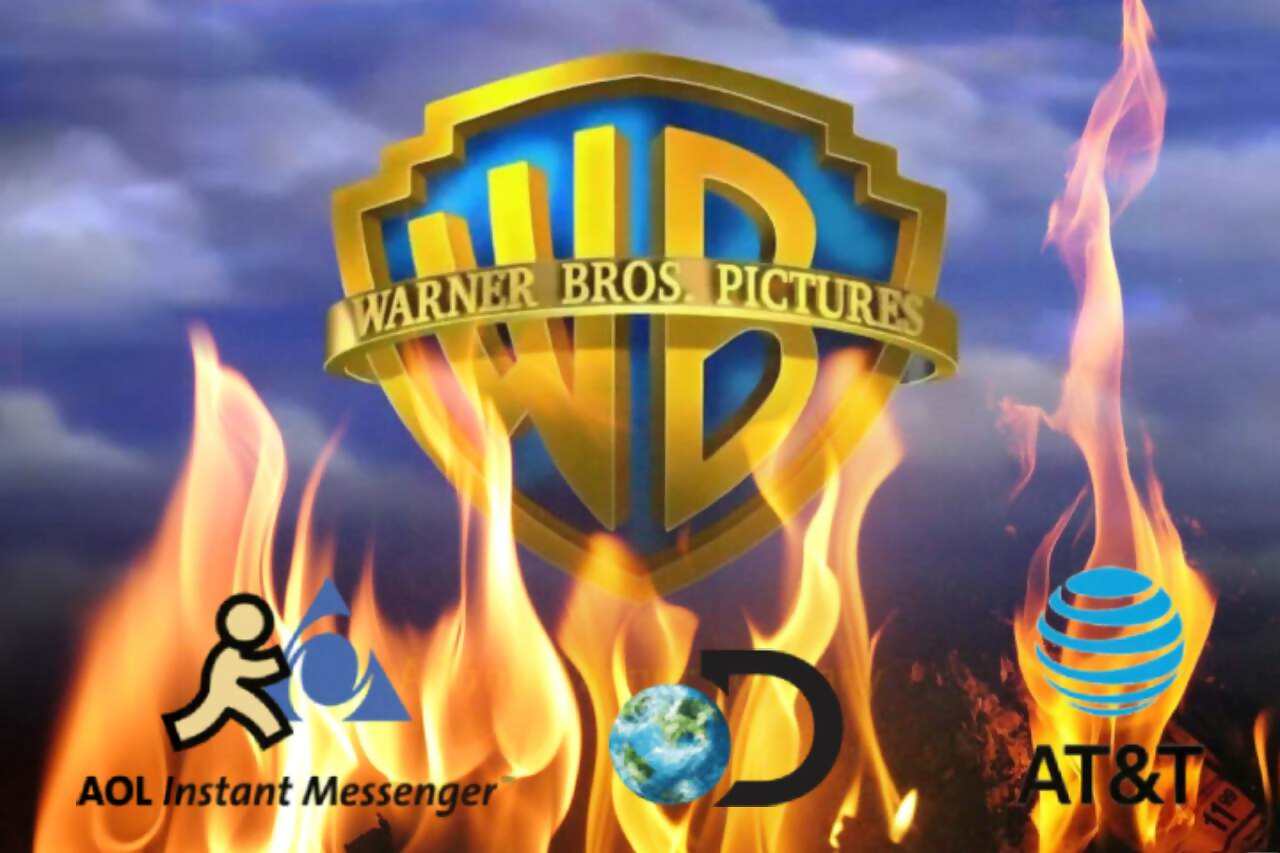
2000 – AOL
From the mid-1990s to the end of the decade, a new-fangled thing called the ‘internet’ saw investors lose their minds. Huge sums were poured into the new sector, bolstering the profits of such firms as Microsoft and Cisco and also young upstarts like Yahoo and America Online (AOL).
A company that had existed under other names in the 1980s, AOL rapidly became the biggest internet service provider in the US. By the turn of the millennium, AOL was so flush with investor cash that it decided to buy Time Warner.
By this point, what was Warner Bros had already merged and morphed multiple times, like some dreadful entity in John Carpenter’s The Thing. It had marged with Time Inc in 1989, creating a huge empire covering film, TV, music and publishing. Then came a merger with Turner Broadcasting, which saw such entities as CNN, Cartoon Network and a slew of Turner and MGM movies fall under its umbrella.


Suggested product
Issue #61 (Horror Special): Magazine + Signed Ben Wheatley F&TT&N: Issue #4 (Reprint)
£14.99
The AOL deal was a bit different, though. For one thing, it would see a modern tech company buy up what was essentially a traditional media conglomerate. On the face of it, this wasn’t an illogical idea: AOL’s executives saw a future of broadband and digital media, and recognised that people would be increasingly finding their entertainment on the internet.
A big problem was the deal’s lop-sidedness. As financial expert David L Bahnsen pointed out in 2025, AOL was the bigger company on paper, but that was because its share prices were so absurdly inflated; Warner Bros’ actual earnings around 1999 were $1.3bn, while AOL’s were much lower at $1bn.
Warner also had an entire library of valuable assets behind it. All AOL had was, to quote Bahnsen, “a promise, a dream, a glimpse of an undefined internet future” – hence why, at its peak, AOL’s stock was three times higher than Disney’s.
Nevertheless, the merger was set up in January 2000. A lawyer named Randall Boe, who was at AOL at the time of the merger, described on LinkedIn an uncomfortable and bewildering union between two companies of vastly different size and type.
“We were trying to get up to speed on the dizzying array of [businesses] housed under the Time Warner mantle,” Boe wrote. “A cable company, two movie studios, a music company, HBO, Turner, Time, Inc. Our task was easier than our [Time Warner] counterparts – they were trying to understand how to mesh their very traditional media business with what was one of the very first internet unicorns.”
The deal, worth some $182bn, created the new, digital media behemoth AOL Time Warner when it was all waved through in January 2001. In theory, the new powerhouse was worth $350bn according to History.com.
Then the dot-com bubble burst.
THE FALLOUT:
The stock market was already beginning to plummet as the AOL-Warner deal was being hashed out in 2000. By 2002, the plummet had become a full-on crash, with dot-com companies valued in the millions one month suddenly bankrupt by the next (pets.com, we hardly knew thee).
AOL Time Warner was hugely impacted, announcing a $99bn write-down in 2002 – the largest reduction in company value then recorded.
For the company’s workers, the aftermath was grim. Roughly 5,800 people lost their jobs immediately afterwards. A further 3,000 jobs – perhaps as many as 5,000 – were lost in the years after October 2003, when ‘AOL’ was taken out of the AOL Time Warner name.
It’s worth noting that the AOL deal wasn’t merely a victim of bad timing, however. When the deal was made, AOL and Time Warner’s accountants made some absurd profit forecasts: to meet them, the combined AOL Time Warner’s profits would have had to have grown by 15 percent each year, every year, for the next decade and a half.
To quote Bahnsen again:
“That would have meant $50 billion in pre-tax profits and $34 billion post-tax. At the time, General Electric, which had a market cap more than double that of the combined AOL-Time Warner, had $12.5 billion in annual after-tax profits.”
Even without the dot-com crash, AOL Time Warner would almost certainly have failed to meet those projections. Cuts would have had to have been made and more jobs would have been lost.
You’ll soon see a pattern forming here.
2016 – AT&T
By 2009, AOL and Time Warner had formally broken up. As the dust settled on the disaster, along came telecommunications giant AT&T.
Not unlike the earlier AOL deal, AT&T’s plan was to mix its vast network of cable and wireless comms tech with Warner’s library of film, TV and music, creating a media giant capable of competing in the new streaming era.
A deal was made for a shade over $85bn, while AT&T also agreed to take on Warner’s substantial debts, bringing the final sum up to $108.7bn.
The proposed merger was considered to be so consequential for the media landscape that the Department of Justice attempted to block it. The DoJ’s argument was that the resulting company would be bad news for consumers, since it would be able to fix subscription prices to its streaming services or try to choke off competition by refusing to release its film and TV output on other platforms, such as Netflix.
The legal battle went on for two years, and was finally brought to a close in 2018, when Time Warner was renamed WarnerMedia.
Almost right away, the merger was considered to be ill-conceived by some financial experts: AT&T had paid too much for Warner, the thinking went, and left AT&T weighed down with too much debt.
There were also said to have been major operational differences between the two companies that couldn’t be reconciled. In 2021, former Time Warner chairman Jeff Bewkes complained that the merger hadn’t worked out as hoped, and that “Because [AT&T] didn’t have network studios we thought they would let our people guide the process. Instead, they replaced our management with theirs.”
AT&T countered that the streaming platform HBO Max had successfully launched after the merger, and that subscribers were growing.
All the same, AT&T soon decided to sell WarnerMedia on – resulting in yet more losses.
THE FALLOUT:
By the time AT&T sold WarnerMedia (see below) it had lost a reported $40-$60bn in the process. Once again, workers also bore the brunt; when AT&T bought Warner in 2018, it was estimated that 7,000 people lost their jobs. After a bout of restructuring in 2020, a further 1,000 people went, then 2,000 more a year after that.
Then the whole Discovery thing happened.
2022 – Discovery
Having had its fingers thoroughly burned, AT&T sold WarnerMedia to Discovery Inc in 2022, creating yet another new company: Warner Bros Discovery. The intent was to forge some sort of Swiss army knife of an entertainment monster, comprising Discovery’s unscripted TV and documentaries with Warner’s own vast library of stuff.
This meant that, in the wake of the $45m bargain, Warner Bros was a multimedia conglomerate which owned, in part: DC Studios, CNN, Discovery Channel, TLC, Cartoon Network, TNT Sports, as well as a huge back catalogue of movies and videogames.
Seriously, the number of names and entities lurking under the WBD banner is intimidatingly huge.
THE FALLOUT:
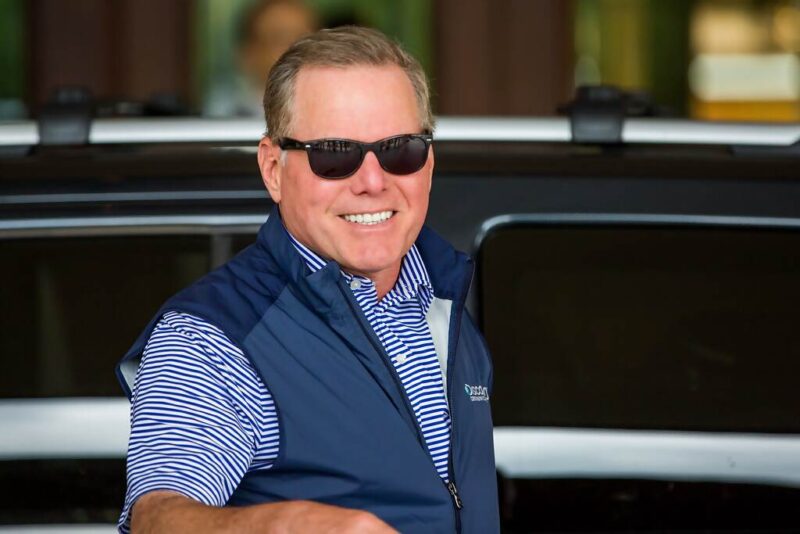
The creation of Warner Bros Discovery left the company under control of David Zaslav, previously the CEO and president of Discovery Inc. Under his gaze, thousands of jobs went as a protracted phase of ‘consolidation’ got underway. At the same time, multiple films were shelved as tax write-offs, including Batgirl and Acme Vs Coyote.
Zaslav said at the time that the cuts were made to reduce Warner Bros’ debt (much of it brought about, ironically, by previous mergers) arguing that he was being “careful and judicious.”
None of that cost-cutting appeared to affect his pay cheques, however. In 2023, Zaslav was paid a salary of $49.7m. The following summer, he announced plans to cut a further 1,000 jobs.
2026 – Paramount Skydance (?)
All of which bring us back up to (almost) the present. For all the cutting and consolidation that was going on, WBD’s stock prices had continued to fall through 2023 and 2024 – only to soar again in 2025.
Why? Because David Zaslav announced that Warner Bros Discovery was to be split into two companies again, with streaming and movies falling under the Warner Bros banner and sports and TV continuing as Discovery Global Networks. It’s almost as though massive, ungainly companies are a bad idea or something.
Warner Bros Discovery was then put up for sale in 2025, and investors began to salivate at the moneymaking opportunities ahead – hence the surge in stock prices.
At first, it looked as though Netflix might buy the company, but then Paramount Skydance, stuffed with investors’ cash following its own recent merger, swooped in with an offer of $108.4bn. Barring some late legal upset, the deal should be completed before the end of 2026.
THE FALLOUT:
We can’t say for sure what will happen next, but the historical patterns are clear. Mergers inevitably lead to job losses as cuts are made and areas of business deemed unnecessary by new management are trimmed away.
But as journalist Karl Bode pointed out the other day, Warner Bros’ mergers since the millennium have also resulted in “price hikes, shittier products, and everybody losing their shirt.”
There’s certainly one winner in all this, though. Once the Paramount-Warner merger is complete, David Zaslav will receive an estimated payout of $700m.