From 1970 onwards, the disaster movie enjoyed a brief yet incredibly loud moment of box office glory. We look back at its rise, fall and eventual return. “If you kill the bee, you’re gonna kill the crops!” a clammy-looking Michael Caine raged in 1978’s The Swarm. “If you kill the plants you’ll kill the people! ... Airport, The Swarm and the birth, death and rebirth of disaster movies
From 1970 onwards, the disaster movie enjoyed a brief yet incredibly loud moment of box office glory. We look back at its rise, fall and eventual return.
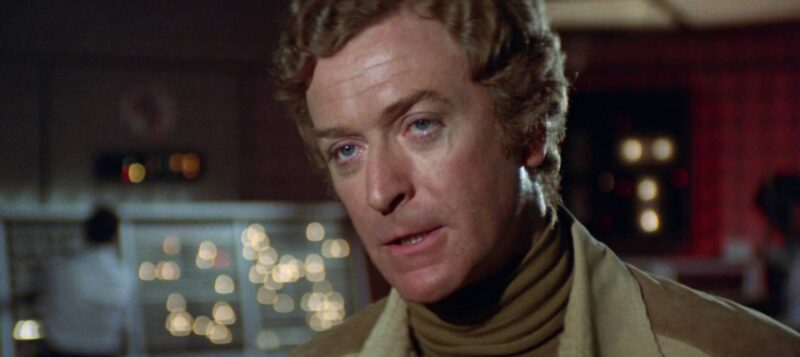
“If you kill the bee, you’re gonna kill the crops!” a clammy-looking Michael Caine raged in 1978’s The Swarm. “If you kill the plants you’ll kill the people! No! No, general! There will be no air drop!”
Caine’s ranting performance – delivered as though all of his lines were bold and underlined – was perhaps an apt summary of where the disaster genre was going towards the end of the 1970s. Once reliably popular, these starry, event-filled epics were now beginning to look overblown, daft and slightly desperate.
Filmmakers were having to dig ever deeper to find new scenarios for their stories; special effects that once looked impressive began to look a bit shonky in the wake of Star Wars. And, really, wasn’t watching huge ensemble casts suffer, panic, bicker and die at the hands of natural disasters just a bit… well, depressing?
The end of the 1970s saw a string of disaster movies falter at the box office. The Swarm failed to make its money back; the following year, a poorly-wigged Sean Connery failed to lift the big-budget Meteor out of the doldrums. By the start of the 1980s, When Time Ran Out’s title seemed all-too-apt; Airplane!, which became one of 1980’s biggest hits by lampooning the genre, suggested that the disaster film really had run its course.
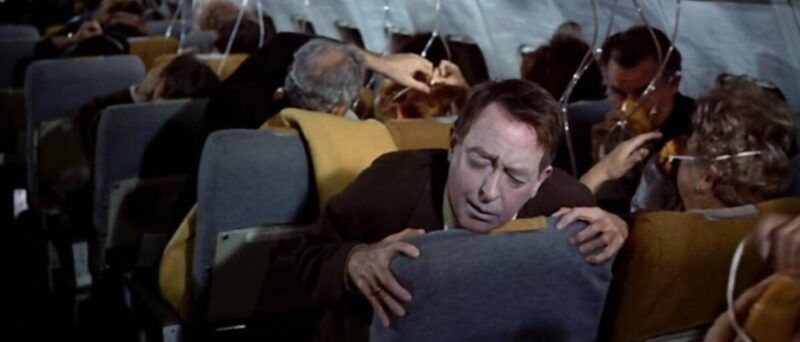
Just a decade earlier, widescreen tales of death and disaster packed in audiences worldwide. Although it certainly wasn’t the first of its type, 1970’s Airport, directed by George Seaton, set out the formula for a typical disaster flick of that era. An ensemble cast of stars and familiar character actors are thrown together in some nightmare situation, and audiences are left to wonder which of them will live or die.
By later standards, Airport was quite modest in its scope. Based on the novel by Arthur Hailey, it relates what is essentially the workday from hell at a Chigago air terminal one winter. There’s snow and a stranded plane causing havoc on the runway; meanwhile, aboard a cruising airliner, a sweaty passenger clutches a briefcase with a bomb secreted inside.
Focusing more on suspense and interpersonal drama than scenes of destruction, Airport’s cast was, to use a modern term, stacked: Burt Lancaster, Dean Martin, Jacqueline Bisset, George Kennedy, Dana Wynter and Jean Seberg to name a few. Universal spared little expense on Airport – the budget was a then high $10m – but it was rewarded with a huge box office hit that managed to get nine Oscar nominations.
Airport led not only to a string of direct sequels (more on those later) but also the broader realisation in Hollywood that audiences would pay good money to see celebrities in danger. Enter producer Irwin Allen, who in the 1960s was best known for a cycle of hit TV shows, including Lost In Space and Voyage To The Bottom Of The Sea.
Allen had had a project on his desk for years: The Poseidon Adventure, also based on a novel (this one by Paul Gallico). He’d tried to get a film adaptation off the ground in 1969, but with no success; after Airport, he finally managed to get it going at 20th Century Fox.
In the resulting 1972 film, it’s a capsized ocean-going liner that becomes the venue for a tale of death and survival. Playing the ensemble cast of characters – many of them with chequered pasts – were Gene Hackman, Ernest Borgnine, Roddy McDowall, Shelley Winters and Leslie Nielsen. The budget was roughly half of Airport’s, but director Ronald Neame made every dollar count, and the scenes of a huge ship knocked onto its deck by a gigantic wave looked impressive for the time.

Suggested product
Issue #60 Magazine Bundle (3x Covers: A Scanner Darkly Magazine + 1991 + Roger Deakins)
£14.99

Reflecting an era of Vietnam war footage on TV and social unrest on the news, The Poseidon Adventure also had a grisly streak that would come to define the decade’s disaster films. Characters die often and horribly; even sweeter, likable souls like Shelley Winters’ Belle aren’t safe from death’s cold, uncaring hand.
The mix of famous faces and doom made The Poseidon Adventure an even bigger hit than Airport relative to its budget. It made $128m for Fox, and like Airport, was recognised by the Oscars, with nine nominations and two wins, including an award for its visual effects.
With results like those, it’s little surprise that other producers began thinking about making similar movies of their own. And so it was that 1974 unofficially became the year of the disaster: Airport got its first sequel, Airport 1975, starring Charlton Heston. Univeral put out Earthquake, featuring new, foundation-trembling Senssurround technology, which also starred Charlton Heston. Even British producers got in on the act with Juggernaut and Gold.
Biggest of all, though, was The Towering Inferno, which represented the disaster movie’s zenith Produced by Allen, it was the film that helped earn him a deserved nickname: the Master of Disaster. Everything about it was big and brash: Steve McQueen and Paul Newman famously vied over who would get top billing; the rest of the cast was filled with big-name veterans (William Holden! Fred Astaire!) and hot new talent (Faye Dunaway! Er, OJ Simpson!).
The Towering Inferno was a perfect example of why disaster movies had such a huge appeal. With TV offering an ever greater competitor to cinemas, studios needed ever grander, more eye-catching spectacles to hook audiences back in. And in 1974, there was only one place where you could see star Robert Wagner walk, on fire, for three straight minutes before he fell face-first from the 65th floor of a burning skyscraper.
Director John Guillermin’s raging epic blazed a trail through the year’s box office, making $50m in the US alone and becoming 1974’s biggest hit. But then, its rivals weren’t far behind; Universal’s Earthquake and Airport 1975 both made the top 10 highest-grossing films.
In many respects, the disaster film was the flipside of the coin from the downbeat New Hollywood films that began in the 1960s and into the following decade. If films like Easy Rider, Five Easy Pieces and Serpico were the work of a younger group of movie-makers trying create a more expressive, honest and European form of cinema, then the disaster genre was the mainstream’s attempt to create something edgier and grittier within the traditional Hollywood mould.
Audiences may have lost interest in seeing, say, Charlton Heston in an old-fashioned biblical epic. But would they watch him run around Los Angeles as it’s torn apart by seismic shocks in Earthquake? Yes. Yes, they would.
Disaster loomed so large over mid-70s Hollywood that the genre affected even films that we might not associate with the genre today. Jaws was arguably a disaster movie at sea, its limb-munching Great White being as much a force of nature as a tsunami or an earthquake. That there were two rival attempts to revive King Kong in the 1970s was undoubtedly due to the popularity of films like The Towering Inferno; ultimately, Paramount and producer Dino De Laurentiis emerged victorious over Universal’s rival project, and it’s no coincidence that the director of 1976’s King Kong happened to be John Guillermin.
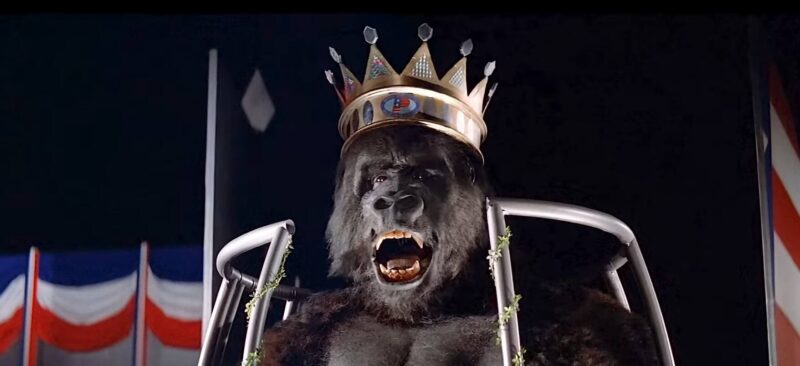
In retrospect, however, King Kong also brought with it the first signs of disaster fatigue. Its budget was massive at around $23m – millions of it spent on a huge mechanical ape too unreliable to be used much in the film itself – but the box office receipts were less than half of The Towering Inferno’s. King Kong got a couple of Oscar nominations, but critics complained that it was ponderous and no match for the much-loved 1933 original.
An even louder warning shot rang out the year after, when Star Wars became a cultural phenomenon. Rather than spend millions on expensive Hollywood actors, writer-director George Lucas largely spent his $11m budget on world-building – exotic sets, costumes, alien makeup effects, and ground-breaking, motion-controlled VFX. Here, all of a sudden, was a new reason for audiences to leave their houses and enjoy a film on the big screen. And with Star Wars, the spectacle wasn’t tethered to grisly deaths and scenes of devastation; instead, it was good-natured adventure that, just a few years earlier, might have seemed painfully naive.
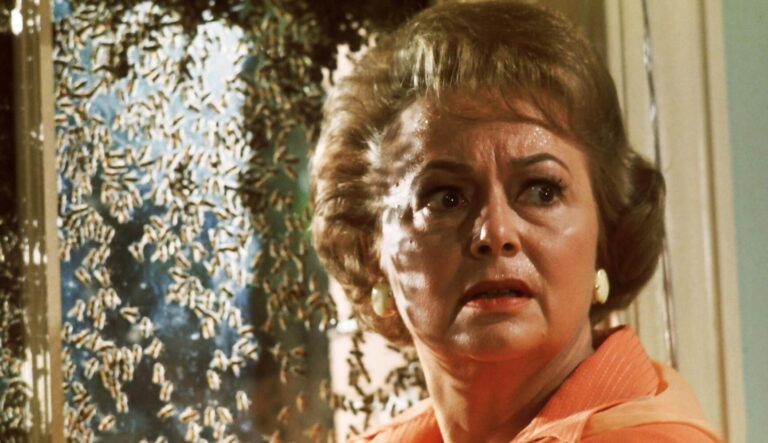
Besides, the disasters had begun to look increasingly silly and threadbare by this point, anyway. Second sequel Airport 77 (1977) sent a Boeing 747 plunging to the bottom of the sea, leaving the likes of Jack Lemmon, Joseph Cotten and Olivia de Havilland to panic about the fish they could suddenly see through the little windows. By the time of Airport ‘80: The Concorde (1979), and a sequence where George Kennedy fires a flare gun out of the window of a moving supersonic airliner, the genre was beginning to look distinctly long in the tooth.
Just as badly, Irwin Allen’s once assured formula simply stopped working. The Swarm (1978), one of two films of the era about killer bees, couldn’t garner interest, despite Michael Caine’s shouting and the usual starry ensemble to back him up. Beyond The Poseidon Adventure (1979), also starring Michael Caine for some reason, cost $10m and lost just about all of it.

Then Leslie Nielsen, who’d previously appeared in The Poseidon Adventure, made himself into a late-career star by appearing in 1980’s Airplane!. A dedicated spoof of the Airport franchise, its attention to detail was such that its makers took the 1957 film Zero Hour! and essentially made it again with added (intentional) humour. Zero Hour! was co-written by Arthur Hailey, who also wrote the original novel on which Airport was based.
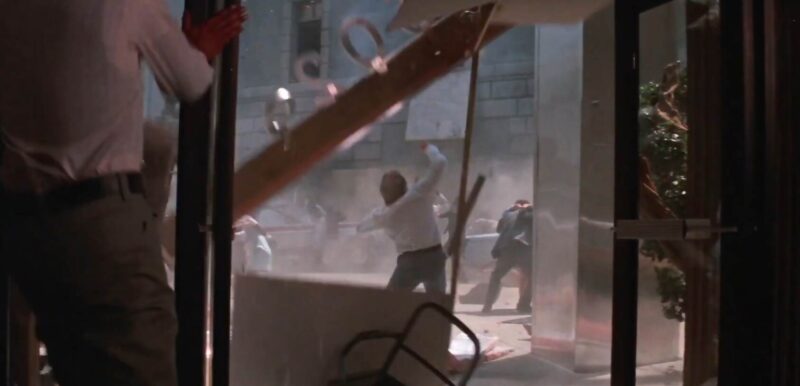
It was a fitting end, perhaps, to a genre that for a brief period dominated the box office. Airplane! mercilessly skewered the weaker aspects of those 70s flicks – the stock characters, the contrived backstories, the cheesy dialogue – while adding a heap of zany jokes and some quite decent set-pieces (the scene where a jumbo jet crashes through an airport terminal window looks pretty good, considering). On a budget of just $3.5m, Airplane! made a startling $171m worldwide – the kind of money straight-faced disaster movies were making in their heyday.
Not that the disaster movie went away forever: Die Hard was partly inspired by The Towering Inferno’s multi-storey thrills. Roland Emmerich channeled the genre’s spirit with 1996’s Independence Day and the string of city-wrecking epics he made afterwards. Hints of Irwin Allen’s appetite for destruction can similarly be felt in everything from superhero movies like The Avengers and Batman V Superman to Renny Harlin’s sensibly-priced Deep Water, released this year. About a downed airliner menaced by sharks, the latter almost looks like an Airport sequel if you squint hard enough.
Irwin Allen died in 1991, years before the resurgence of disaster films kicked off by Independence Day took place. But the impact of his films, and the others that came in the whole cycle of loud, crashing survival pictures, still looms large in the 21st century. As Allen once observed, “As long as there are human beings on this planet there’s going to be tragedy in real life.”
By extension, as long as there are human beings to make movies, there’ll probably be disaster movies of one sort or another.