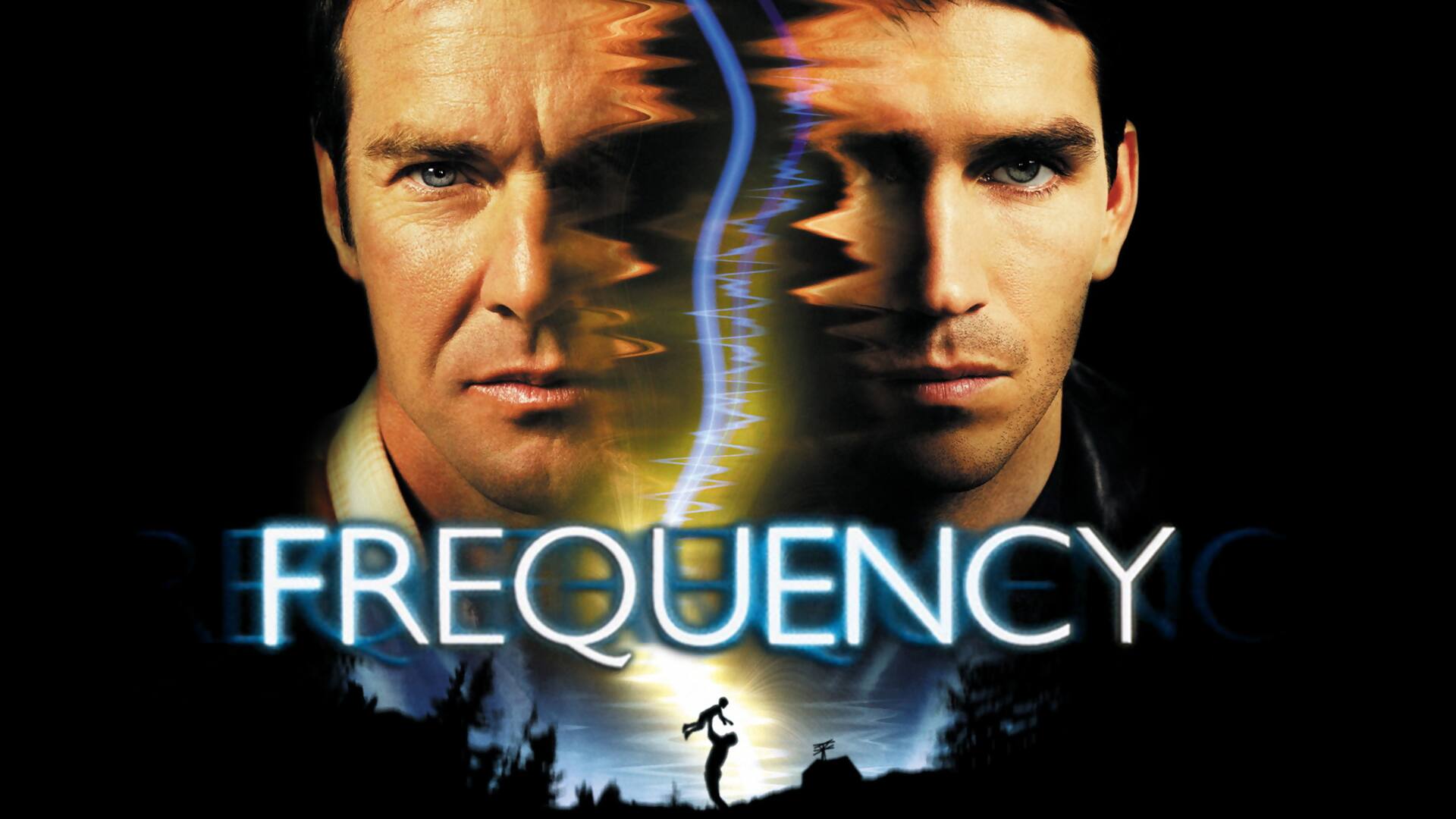
Starring Jim Caviezel and Douglas Quaid, Frequency was a sci-fi thriller with one eye on the past. As we re-evaluate the cinema of 2000, does it stand the test of time? This is the latest in AJ Black’s series of features on films released in the year 2000. He previously looked back at Jonathan Mostow’s ... Frequency | Revisiting a mix of nostalgic sci-fi and murder mystery thriller
Starring Jim Caviezel and Douglas Quaid, Frequency was a sci-fi thriller with one eye on the past. As we re-evaluate the cinema of 2000, does it stand the test of time?
This is the latest in AJ Black’s series of features on films released in the year 2000. He previously looked back at Jonathan Mostow’s war drama, U-571. Potential spoilers lie ahead…
As someone who is a sucker for a good time-travel yarn, Frequency scratched an itch for me as a viewer, even if it did so in more of a sedate manner than we usually see in the subgenre.
When most people think about time travel stories, certainly at the movies, their mind will go straight to the iconic staple of that genre: Back To The Future. There had been films concerning interlopers across time before, of course; 1962’s La Jetee, later remade as Twelve Monkeys, or earlier with George Pal’s seminal 1960 version of HG Wells’ The Time Machine, and more besides. Robert Zemeckis’ comedy made time travelfun. It added wonder to what has always been a knotty sci-fi concept, even when played for eccentricity or colour, as it often was on television – particularly in the 1960s with shows like Star Trek, Doctor Who or The Time Tunnel.
Frequency is a different texture of time travel film because it not only takes the subject matter more seriously, but it also frames the broader sci-fi concept underpinning it in overly non-sci-fi terms. Director Gregory Hoblit’s film is about loss, coming to terms with the past, and the wish-fulfilment of changing your own history. Life didn’t pan out for Jim Caviezel’s John Sullivan the way he might have imagined after his heroic fireman father, Frank (played with all-American sincerity by Dennis Quaid), dies in a fire when he is just a little boy. Their strange, almost magical connection via an old CB radio – made thanks to a mystical aurora borealis in the sky – gives them the chance to not just connect, but actively play around with temporal physics. It’s a personal father and son drama with time-travel trappings.
In that sense, Frequency owes a debt to anthology sci-fi such as The Twilight Zone or The Outer Limits, in attempting to ground the subject matter in a level of humanity. The message is simple: you can go home again.
A trend I’m finding with American cinema produced at the end of the 1990s is that a great deal of them seem anxious about the millennium, ahead, and glance back at the nation’s own history through a variety of lenses.
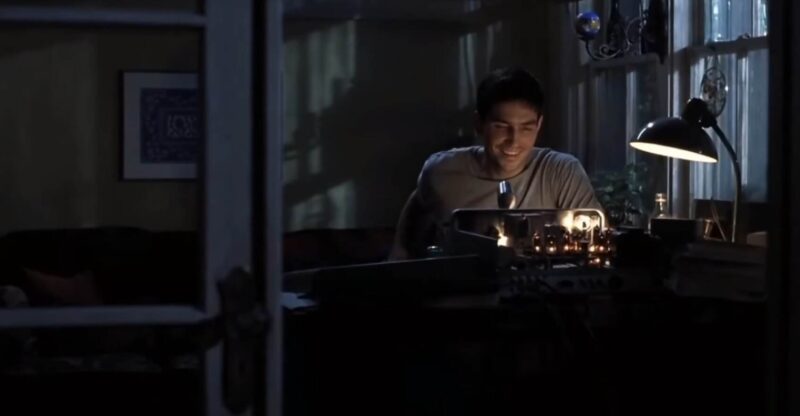
U-571 attempted to distort American success in World War Two as a way of ameliorating the troubling legacy the country built in the decades after. Rules Of Engagement, on the flip side, examined the moral character of the American military machine yet couldn’t quite bring itself to excoriate that system. Everywhere you looked, America refracts its society. Frequency is one of the better examples of that in how it nostalgically looks back to the 1960s, wishing dearly for a simpler America, a simpler time, and a return to wholesome family values. Talking via a CB is a symbolic representation of that – old technology repurposed as a conduit between different eras.
Initially, Sylvester Stallone was tapped for the Frank Sullivan role, but there’s no doubt that Stallone’s sheer force of character would have overshadowed the tone and texture of Hoblit and screenwriter Toby Emmerich’s film (Emmerich’s brother Noah incidentally gets an acting role as John’s buddy, Gordy). Quaid is a better choice because he’s a solid, un-showy actor who you can believe as the earnest firefighter with the homely, beautiful wife (a pre-Lost Elizabeth Mitchell) and baseball-loving young son. Caviezel, not yet infamous for his role as Jesus in Mel Gibson’s The Passion Of The Christ, has a similar understated angst as the grown up John, a worn out cop in a de-saturated 1999 which teeters on the edge of dystopia.
In some sense, so does Frank in 1969. The American Dream was certainly about to end, with Vietnam in full swing, the Manson murders on the horizon, and the Watergate scandal and economic depression yet to come in the 1970s. Two men at the end of two relatively progressive decades (though the 90s was far more socially and politically stable than the 60s), looking ahead at an uncertain future, and wistful for a calmer past. Frequency serves as an allegorical microcosm for America as a whole and in that sense works well in a sci-fi context as it drills down into character and emotion as opposed to figuring out, say, string theory. We hear scientists on the TV in the background discussing the underpinning physics of the story, but Frank and John are meat-and-potatoes men. To them, it might as well be magic.
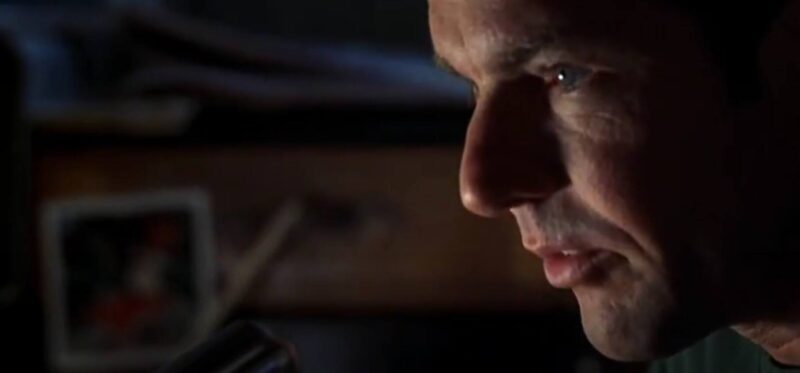
That gives Frequency a certain charm in that it’s pure fantasy, both on a conceptual and emotional level. Who hasn’t lost a parent or loved one and wished they could talk to them again, or go back in time and spend one final day with them? Frank gets the joy of hearing from his son in the future while John, depressed and unable to capture the family life and love his lost father had, is renewed by talking to his father. In that sense, Frequency owes a debt to 90s films such as Ghost or The Sixth Sense; the latter’s box office success and immediate place in popular culture in 1999 no doubt helped get Frequency greenlit. Hoblit’s film is as slow, measured and quiet in many places as those character-led touchstones, where the mystical, supernatural truths were background rather than foreground.
If Frequency falls down, it’s when by necessity it turns into a detective thriller in its second half. As John and Frank cause ripples in time due to them saving the latter’s life, Emmerich and Hoblit feel the need to introduce cause and effect – a set of raised stakes as a result of changing the fabric of time. On one level, this works as a means of reflecting how the past is never quite settled, that we are all haunted by our choices and mistakes. “The past is a funny thing,” John says. “We all have skeletons in the closet. You just never know when they’re gonna pop up and bite you in the ass.”
Hence why Frequency feels the need to have John and Frank team up, across a 30 year distance, to try and stop a corrupt cop turned serial killer from destroying their family.
While on a thematic level it tracks, and allows for an enjoyably wacky final battle as John and Frank fight the same man at the same time in two different time periods, it almost cheapens the wholesome aspect of the story. The killer, Jack Shepard, is a destructive totem for the darkness that morphs and changes the America that John and Frank knew, a representation of how the family ideal, the ‘dream’, has been shattered. He’s a Manson-in-waiting in the psychedelic 60s, and he’s an embittered old cop in the 90s, which fits the broader ideas the film plays with, but feels cheaper than the elegant sci-fi of the film’s first half. You almost wish Frequency hadn’t felt the need to morph into a lacklustre murder mystery to make its point.
This never prevents Frequency from being an entertaining and well-constructed piece of work, and a different shade of time-travel story than we typically see in cinema. It did relatively well at the box office, clawing back double its budget, and remained enough in the mind’s eye of audiences that in 2016, a short-lived TV series adaptation ran for one season and built on the premise, aware that you could make a vaguely sci-fi procedural series out of the time connection concept. It lacked the innate, nostalgic charm of Hoblit’s film, however, which feels particularly locked into its own pre-millennial place in pop culture.
Frequency could almost be a capstone for American storytelling’s 90s fascination with re-examining and deconstructing the 1960s, even if that trend wasn’t quite ready to completely disappear just yet.
You can find A J. on social media, including links to his podcasts and books, via Linktr.ee here.
/**/