Cinematographer John Mathieson used the word ‘lazy’ in relation to Ridley Scott’s filmmaking last year. Ridley Scott isn’t impressed. As Ridley Scott’s sword-and-sandal sequel was working its way around cinemas in November 2024, its director of photography John Mathieson gave an unusually frank interview with The DocFix Documentary Storytelling Podcast. In it, he talked about ... Ridley Scott won’t, unsurprisingly, work with his Gladiator II cinematographer again
Cinematographer John Mathieson used the word ‘lazy’ in relation to Ridley Scott’s filmmaking last year. Ridley Scott isn’t impressed.
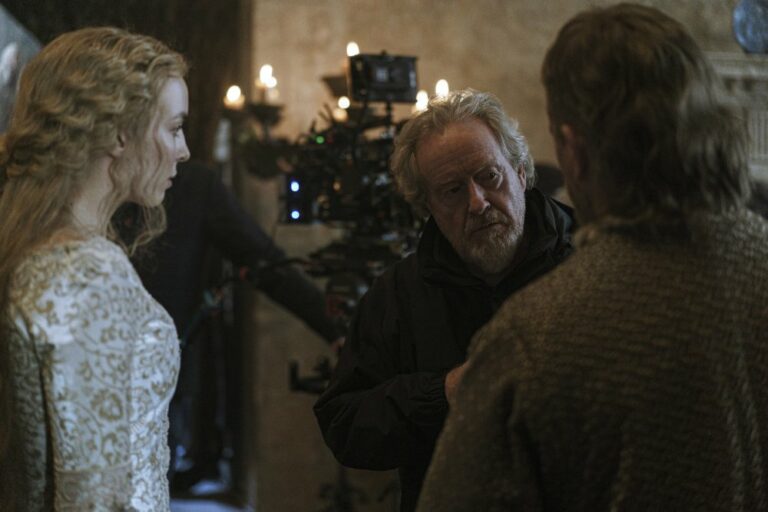
As Ridley Scott’s sword-and-sandal sequel was working its way around cinemas in November 2024, its director of photography John Mathieson gave an unusually frank interview with The DocFix Documentary Storytelling Podcast. In it, he talked about Scott’s use of multiple cameras, minimal takes, and post-production to tidy up elements such as boom mics, cameras or cups of tea left in shots.
“It’s really lazy,” Mathieson said, among other choice comments.
The cinematographer and the podcast’s host, Nigel Levy, went on a round of course-correction, saying that Mathieson was talking about a modern era of digital filmmaking in general and not Gladiator II in particular, and that it only sounded like a dig at Ridley Scott because of the way the interview was edited.
In terms of Mathieson’s working relationship with the veteran filmmaker, the damage appears to have been done, however. Scott spoke to Dazed in the run-up to the BFI’s retrospective on his career in filmmaking, and the outlet asked him about Mathieson and whether he’d work with him again.
“He said something really extraordinary on a podcast,” Scott said. “I thought, ‘What?! WHAT!!! And that was it. Sorry, dude. That’s it.”
Read more: Ridley Scott interview | Gladiator II, Alien 3, tennis, art and baboons
Scott has made no secret of his modern approach to filmmaking, in which he’ll capture a scene from multiple angles, and typically move on after a minimal number of takes (“Max three,” Gladiator II star Paul Mescal said to us, with an awe-struck expression on his face, last year.)
“Normally, it’s two or three takes and we’re done,” Scott told us. “And I always use 11 cameras. Four to 11 cameras. So you schedule for the day, but you’re done by 11 o’clock. And the actors say, ‘Goddamn, we did 40 set-ups this morning’. And they’re thrilled to bits with themselves.”
Accepting that Mathieson wasn’t intentionally throwing Gladiator II under the bus, he nevertheless appears to draw a clear distinction between Scott’s 20th century work and his movies in the digital era.
“It’s not very good for cinematography,’ Mathieson said. “[You] can only light from one angle. Look at his older films and getting depth into things was very much part of lighting. You can’t do that with a lot of cameras but he just wants to get it all done.”


Suggested product
Issue #60 Magazine Bundle (3x Covers: A Scanner Darkly Magazine + 1991 + Roger Deakins)
£14.99
And get it all done he has. As Scott told Dazed, he’s now in post-production on his post-apocalyptic sci-fi film The Dog Stars, which he shot in 34 days (“It’s the speed of a TV show but maybe my best movie,” he told the outlet). There’s a Bee Gees biopic in the pipeline, a possible Gladiator III, a film about the Battle of Britain, and he’s also talking about a western called Freewalkers and a WWI film “based on John Harris’s Covenant With Death.”
It’s doubtful that Mathieson will be the cinematographer on any of those films, though, despite their partnership going, off and on, back 25 years to the original Gladiator.
Of that ill-advised podcast, Scott said, wryly, “Maybe he’d had a few pints.”
Ridley Scott: Building Cinematic Worlds is on at the BFI Southbank and BFI IMAX now, and ends on the 8th October.