The 2012 action thriller Lockout ended up in court for plagiarising the plot of Escape Of New York. Here’s what happened: In the 1980s, French director Luc Besson leapt to fame thanks to the mirror-slick look of such films as The Big Blue and La Femme Nikita. While he continued to direct in the 90s ... Lockout | The 2012 film that got sued by John Carpenter
The 2012 action thriller Lockout ended up in court for plagiarising the plot of Escape Of New York. Here’s what happened:
In the 1980s, French director Luc Besson leapt to fame thanks to the mirror-slick look of such films as The Big Blue and La Femme Nikita. While he continued to direct in the 90s and 2000s, he also became known as the writer and producer of mid-budget thrillers, including the Taxi series and the Taken trilogy, the latter turning Liam Neeson into an action star.
Around the time that Taken came out in the late 2000s, Besson came up with the concept for a sci-fi action film called Lockout: the story of a wrongly-convicted former CIA agent sent to an orbiting prison station to rescue the President’s daughter, who’s been taken hostage by its inmates.
Besson had recently seen a short called Prey Alone, made by Irish filmmakers Stephen Saint Leger and James Mather. The 15-minute film’s action and humour had impressed Besson, and so he rang its makers up, invited them to Paris, and gave them the Lockout idea to develop.
“Well, Luc’s just a guy who goes with his gut, I guess,” St Leger said in 2012, when asked why Besson would take a gamble on two first-time filmmakers. “We went off and wrote the script and that was pretty much it.”
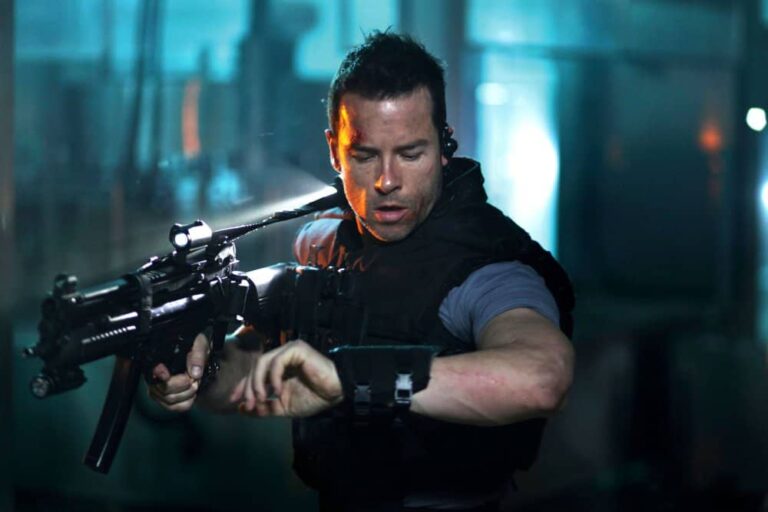
The resulting script was shot for $20m – a small sum given all the visual effects – and largely shot against green screens in Serbia. Its filmmakers also made something of a coup in the casting department; Guy Pearce, an actor who’d been offered action films before but turned them down, agreed to play the lead part of incarcerated tough guy Marion Snow.
Pearce later said that he responded to the script because he found it “quite funny.”
As Pearce told me back then, “I thought, within a film of that style, that kind of character, who doesn’t take himself too seriously, and has clearly got himself to a point where he’s tired of being a hero and so on, I just thought it was a nice take. I know it’s not that original, because we’ve got certain films that our directors wanted to page homage to, I guess – those Die Hard-type films.”
Indeed, Pearce seemed a little apprehensive about becoming an action hero. At the time of the interview, Lockout hadn’t come out yet, and Pearce expressed uncertainty over whether the film would work.
“It’s hard for me to tell with a film like this, because I don’t normally do genre-oriented movies,” he said. “When a film is really, primarily there as a piece of entertainment, I never really know how to judge that sort of thing. I think, if I’m doing a straight drama, I can just tell whether it’s working or whether it’s not, or how effective it is. But it’s hard to tell with a film like this.”
Reviews were certainly mixed when Lockout emerged that April. This writer found it highly entertaining, in a B-movie sort of way, with a sparky performance from Pearce and a fun supporting cast, including Maggie Grace, Lennie James, Peter Stormare and a particularly unhinged turn from Joe Gilgun. Other reviews were more hostile; what united most notices was how much Lockout resembled Escape From New York.

Suggested product
Issue #60 Magazine Bundle (3x Covers: A Scanner Darkly Magazine + 1991 + Roger Deakins)
£14.99

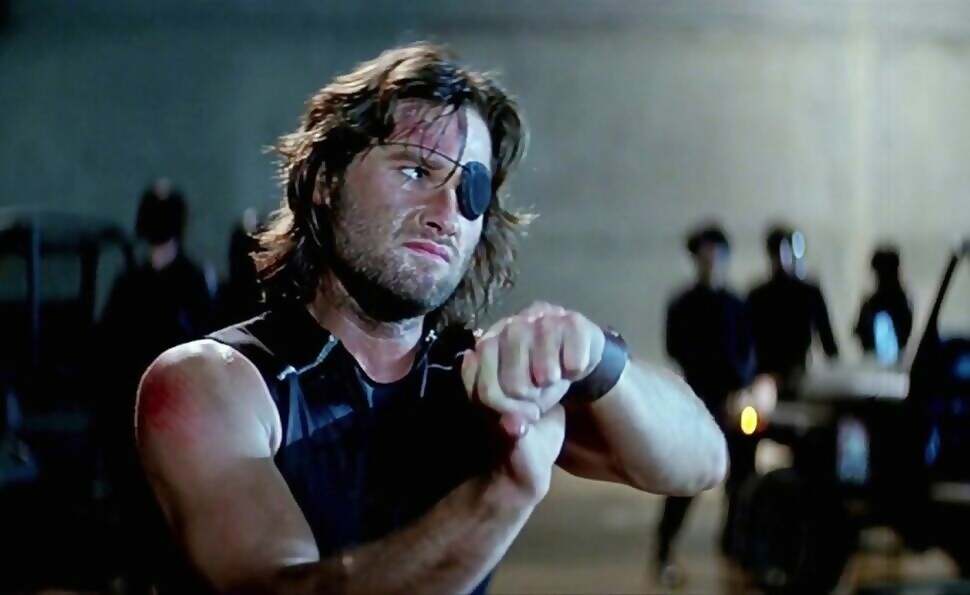
Released in 1981, John Carpenter’s thriller was about an anti-hero who flies into Manhattan, which by 1997 has become a prison colony, to make a daring rescue attempt – in this instance, the US President himself rather than his daughter. Carpenter continued his dystopian world-building with a lesser sequel, Escape From LA, released in 1996.
One person who spotted the similarities between the Escape films and Lockout was John Carpenter himself. In 2014, lawyers representing Carpenter and StudioCanal, which owned the rights to Escape, took out a lawsuit against Besson’s production company, EuropaCorp. They alleged that the studio infringed copyright in making Lockout, arguing that its plot and characters were plagiarised from Escape From New York.
A year later, the court ruled in Carpenter’s favour. It found that while some parts of Lockout could be “considered stock elements in cinema”, the court also agreed that there were rather too many similarities to be considered a coincidence. A summary of the findings published in 2015 reads:
The court nevertheless noted many similarities between the two science-fiction films: both presented an athletic, rebellious and cynical hero sentenced to a period of isolated incarceration – despite his heroic past – who is given the offer of setting out to free the President of the United States or his daughter held hostage in exchange for his freedom; he manages, undetected, to get inside the place where the hostage is being held after a flight in a glider/space shuttle, and finds there a former associate who dies; he pulls off the mission in extremis, and at the end of the film keeps the secret documents recovered in the course of the mission.
Having made a “detailed comparison” of the films’ plot and development, the court determined that a glaring number of elements from Escape From New York – called New York 1997 in France – could be found in Lockout. The court also took note of just how many critics had picked up on Lockout’s similarity to Escape; in the end, the conclusion was that “copyright had indeed been infringed.”
Carpenter and StudioCanal’s lawyers had originally asked for damages of €3m according to The Guardian; the amount awarded was much lower at €80,000. Much of that small sum went to StudioCanal; Carpenter received €20,000; co-writer Nick Castle got €10,000.
Financially speaking, it was little more than a slap on the wrist for EuropaCorp. But then Besson decided to appeal against the judgement, arguing that it hindered “freedom of artistic creation.”
In 2016, the court considered EuropaCorp’s case and decided that, no, Lockout was definitely actionably close to Escape From New York. This time, Besson’s company was ordered to pay out €450,000 to Carpenter and StudioCanal.
Again, it wasn’t ruinous money for a muli-million-euro company like EuropaCorp, and it rumbled on with a range of releases for the rest of the 2010s. Bigger calamities awaited, including the box office disaster that was 2017’s Valerian And The City Of A Thousand Planets (directed by Besson) and allegations of rape levelled against Besson in 2018 (the case was later dismissed in 2023).
By 2019, EuropaCorp was on the verge of going bust, and large chunks of the firm were sold off to investment firms.
Lockout represented a highly unusual case in cinema history, however. Movies are often compared to each other by critics, and filmmakers may liberally borrow from each other on occasions – just look at the similarities between The Fast And The Furious and director Kathryn Bigelow’s earlier Point Break. Instances of one film being proven to have plagiarised from another in a court of law are vanishingly rare.
In the final event, Lockout was too poorly received, critically and financially, to warrant a sequel. But after that awkward legal battle, Besson probably wouldn’t have been in a rush to make a follow-up in any case.