With a clutch of new labels specialising in physical media emerging in 2025, the future’s looking bright for DVD and Blu-ray. We talk to some of the companies involved in a disc renaissance… The figures are in for 2025, and once again show physical media’s resilience. It’s an ever-changing market where major studios have stopped ... The physical media landscape in 2025 and beyond
With a clutch of new labels specialising in physical media emerging in 2025, the future’s looking bright for DVD and Blu-ray. We talk to some of the companies involved in a disc renaissance…
The figures are in for 2025, and once again show physical media’s resilience. It’s an ever-changing market where major studios have stopped distributing their own titles on disc, with the work outsourced to external companies. This isn’t necessarilya sign that the market for DVDs and Blu-rays is going to disappear, however.
The arrival of new labels and imprints has shown that distributors are keen to maximise the revenue from Blu-ray releases. Moreover, despite predictions of its demise in a post-streaming world, extinction is currently off the table. It’s noticeable in mainstream coverage of DVDs and Blu-rays, too: gone are the days of The Guardian and other papers talking about the death of entertainment on disc. Outlets in the US and UK are talking about how films on disc are making a vinyl-style comeback.
To revive an oft-used phrase: physical media is dead. Long live physical media.
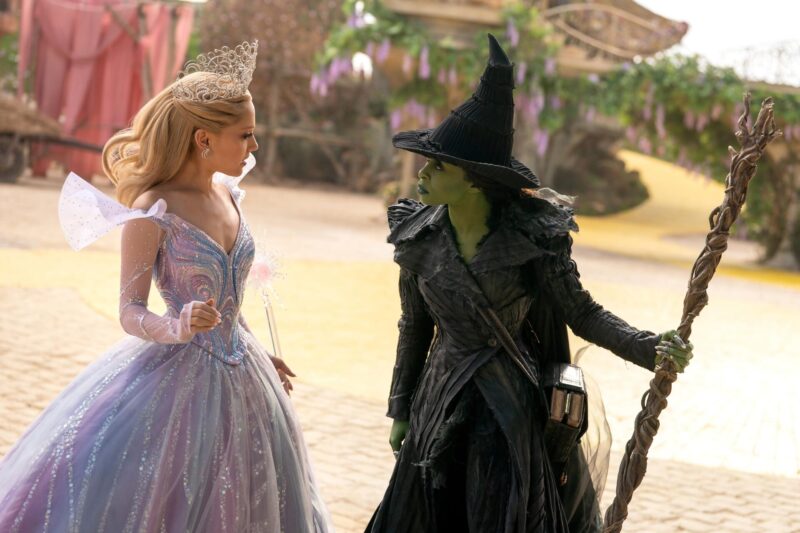
The headline figures are as promising as ever, as the home entertainment market, encompassing “streaming, buying and renting films digitally or on DVD or Blu-Ray” grew by 10 percent in 2025 to a whopping £5.7bn – the highest since records began. Its importance to studios is highlighted by Wicked. The musical earned £61m at the box office and generated revenues of £17.7m in sales and rentals across digital and disc – all of this before it emerged on subscription-based streaming services.
Across digital and physical, renting and buying grew by one percent to a value of £531m. Within this, EST (electronic sell through – meaning digital film purchases) was up 7.4 percent in value terms, while digital rentals increased by 1.7 percent. Among the biggest growth areas were premium video on demand and premium EST – higher priced films available on digital a few weeks after their theatrical release.
Although the delay between cinema and premium digital release lengthened slightly – up from 40 days to 44 days – the number of films that benefited from this strategy, rose to 79, up from 62 in 2024. Films released as PVOD and PEST titles included Wicked, Gladiator II, Conclave, Downton Abbey: The Finale and Superman. Total digital sales rose 3.5 percent to £382 million.
Meanwhile, as trade body BASE ( British Association for Screen Entertainment) notes, physical formats were “resilient” and worth more than £150m last year.
Blu-ray sales grew 3.1 percent year-on-year, with Superman the year’s best-selling disc in that format. The biggest DVD was Downton Abbey: The Finale, which managed to shift 56,000 units last December.
This, BASE says, “reminded retailers of the strength of the DVD market”. Retail, not least in the shape of supermarket giant Tesco, is edging back into physical formats after its much-publicised abandonment of films on disc in 2022, and has responded in kind.
Across both disc formats, Wicked was the year’s big hit. The 4K UHD Blu-ray market, thanks to boutique labels among others, was up by 19.5 percent in 2025, further aided by collectors buying limited edition and Steelbook releases.
One in 10 4K releases had a Steelbook version, and yet thanks to the higher price (an average of £32 per film), they accounted for almost £2 out of every £10 spent.

Catalogue titles also helped drive growth.
“The higher price of the three-film Lord Of The Rings Trilogy achieved sales totalling 13,800, with a value of £804,000, showing the ongoing love for the films with fans, and the importance of older titles remaining available to audiences to own at home,” said BASE’s year-end statement.
Figures were also released by entertainment and retail trade body ERA. “Sales of physical video formats of video including DVD and Blu-ray declined 4.7 percent (2024: -8 per cent) to £148.9m, their slowest rate of decline since 2010,” says its report. “Blu-ray (including 4K UHD) reinforced its position as video’s strongest physical format with sales of £84.2m compared with DVD’s £64.7m.”
ERA chief executive Kim Bayley added that “there are promising signs in the physical format market with a sharp fall in the rate of decline as studios and retailers lean into physical’s distinctive benefits of quality and collectability.”
ERA figures also showed a further decline in physical rental, down almost a third from £4.5 million to £3.2 million, much of it via rental by post operator Cinema Paradiso. But for one of the country’s surviving rental stores, Snips Movies, on the Wirral in the north west, it was a record year.
The store’s Dave Wain – also one of the team behind The Schlock Pit website and a frequent contributor to Blu-rays from the likes of Arrow and 88 Films – told Film Stories’ physical media correspondent Tim Murray’s trade newsletter The Raygun:
“Rental for 2025 has been a record breaker for Snips. The number of films out on loan gets higher with every passing week, and new customers seem to be discovering the store on an almost daily basis.”
Overall, the year’s top distributor was Universal, its dominance stretching across both home entertainment and theatrical, ahead of Warner. It’s noteworthy that both studios saw changes to their home entertainment model last year.

Universal now licenses its physical media titles to sales company Spirit Entertainment, while Warner ended the year inking a similar deal with Elevation Sales, a joint venture between Lionsgate and StudioCanal which also handles disc releases for Disney, Paramount and Sony. Universal and Warner are now the dominant forces in physical media, and their use of sales companies has helped foster further optimism.
“To have 2025 close with a decline below five percent is incredibly encouraging,” says Elevation’s Richard Athill. “It underlines the great work done by our physical retail partners supporting the New Release slate and maximising the revenue opportunities the expanding specialist Catalogue market offers. And let’s not forget Tesco’s re-introduction to the frame, offering further evidence that consumer demand for physical remains strong and viable.”
Spirit’s Rob Callow adds: “The retail physical visual market has continued to be remarkably resilient throughout 2025. New releases, catalogue campaigns, special editions, HD re-releases and TV box sets have all continued to perform extremely well with the market only marginally down year on year… there is no reason the market shouldn’t continue to perform and, who knows, even grow over the coming years.”
Meanwhile, 2026 has already seen further cause for optimism with the arrival of a clutch of new labels.
Visions Home Video is an imprint launched by long-standing distributor Vertigo Releasing, a company that has put out a wealth of genre films over the years, as well as its own productions. Its opening slate of Good Boy, Kevin Smith’s Dogma and Yorgos Lanthimos’ Dogtooth, show its diverse plans. It has previously released some titles under its own steam, as well as sub-licensed films to labels such as Second Sight for weightier releases.
Its move was inspired by the success of the likes of Arrow and similar labels.
“We wanted to be able to directly release elevated physical versions of the right films on our slate and build a brand that spoke to the quality of what we were offering,” says Andrew Dillon, head of the Visions imprint. “We’ll continue to release alongside Visions under the Vertigo Releasing heading as we have done historically, but this will be for the more vanilla titles that don’t necessarily support the limited description.”
Elsewhere, the Anti-Worlds imprint has signposted a potential change in release strategy with the launch of its new Anti-World Originals operation. Its first release was Mismantler, a film directed by Andrew Keogh which grew out of his visuals for the band Nurse With Wound.

Its second release in March is Ben Wheatley’s Bulk. The label, it notes on its website, is eschewing digital releases in favour of physical media. “Anti-Worlds Originals will not be available on VOD – it’s a broken system that doesn’t support films and film-makers so we’re charging a little more – but profits will go to make more films,” it says. “Each release will be lovingly curated and packaged in consultation with the film-makers…and very limited. When they are gone… they are gone!”
Read more: Ben Wheatley interview | Bulk, low-budget filmmaking and knock-off Star Wars movies
Wheatley recently took Bulk on tour with Anti-Worlds co-founder Andy Starke taking part in post-screening Q&As ahead of the physical release. It has a unique, limited edition feel, and, as Wheatley says: “I think it’s about protecting the film. It’s saying that the experience – the Q&A experience and the screening experience – is special. Because the audience has made an effort to go and see it, we’re keeping it back from being just thrown into the pile of content online. It doesn’t really make any difference to us in the long run for it not to be on streaming for another six months or so. We’ll just keep pushing the live experience and the physical media experience, until we’re worn out. It’s a different way of looking at it.”
“It’s the reality of independent distribution these days,” adds Starke. “We’re trying to find different ways and to make it something special, so it doesn’t disappear into a sludge. We’re going to get as many people in one Q&A screening as we would at five screenings at 2.30pm in the afternoon in an independent cinema. It’s building a fanbase for stuff and giving them something that it’s worth being a fan of.”
The pair helped pioneer day and date releases with A Field In England, which landed across all formats, physical, theatrical, on TV and on digital, on the same day, and they see similar potential with their physical-first approach in the future.
As Wheatley says: “When you’re your own distributor as well, then you’re selling the physical media, you’re keeping all the money as well. It’s between you and the financier. You might sell more with a distributor, but you’ll hardly get any of it back – you’d have to sell so many units. It doesn’t really make much sense.”
As Starke concludes, in the absence of the now outdated model of direct-to-video titles that worked so well for British films in the early DVD era, it’s a way of getting more films made.
“With something like Mismantler, we literally gave some money to someone, a very small amount of money, and they went away and made something. They’ve not been paid, which they should be, but it’s a way of creating [something] new. The reality is – and this is why we’ve priced them at the level we have – that with 2,000 or 3,000 sales, you can actually make films on some level. That, to me, is interesting, it’s the start of something, and I think a lot of people are interested in doing it.
“We’re saying to people, sign up, If you pay me 25 quid directly, we could make another one. I’m not going to put it into my sports car; it’s going to go back into making more films. I’m really realistic about what it is, and it’s tiny, and it’s not for everybody, but, but that’s the point, isn’t it? I get it. If you’re going to make a film for everyone, you’re going to need a hell of a lot of money, and that’s fine. I’ve got nothing against those films at all. But this is just about the reality of being an independent producer or independent distributor.”