A feature-length E.T. parody was made in 1985, and may have aired on HBO. But then it vanished. We look at where it went. In 1982, journalist and documentary filmmaker Paul Sammon had the idea of making a parody of ET The Extra-Terrestrial. “This is not a rip-off of E.T.,” he insisted. “A parody acknowledges ... The 1985 E.T. parody movie you’ll never get to see
A feature-length E.T. parody was made in 1985, and may have aired on HBO. But then it vanished. We look at where it went.
In 1982, journalist and documentary filmmaker Paul Sammon had the idea of making a parody of ET The Extra-Terrestrial.
“This is not a rip-off of E.T.,” he insisted. “A parody acknowledges its source material whereas a rip-off does not.”
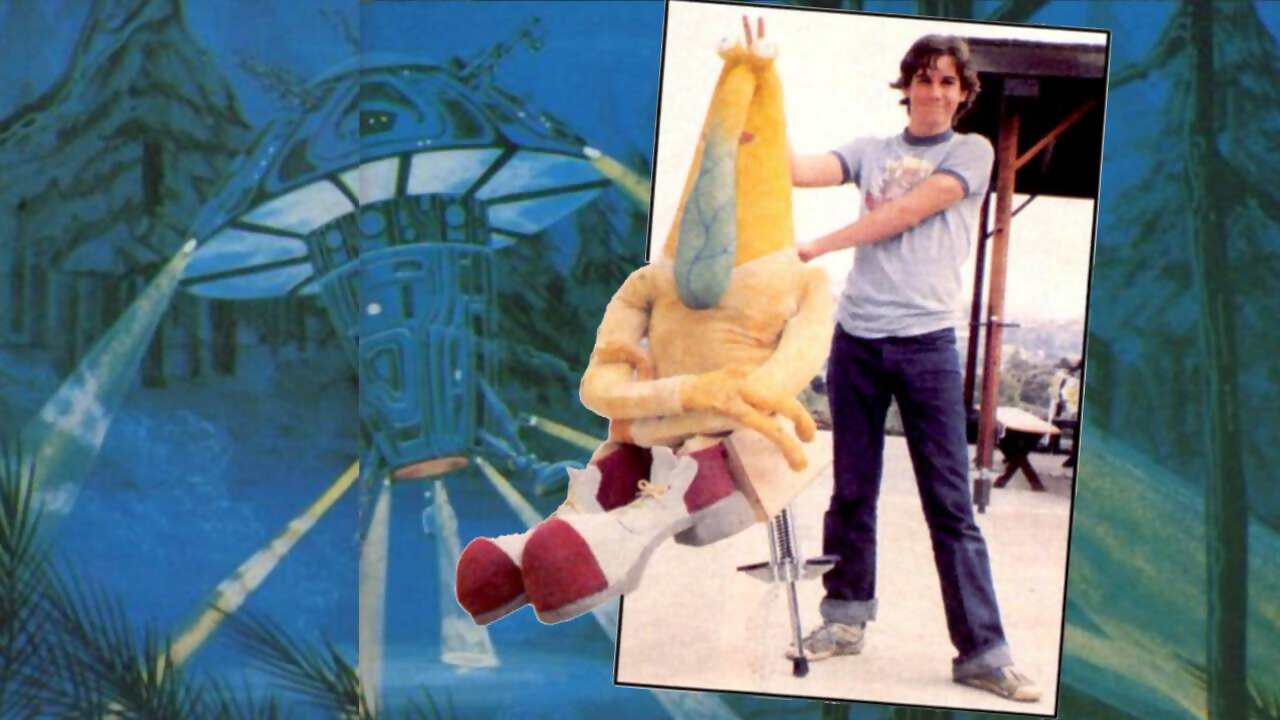
The resulting film was called P.P. – The Planetary Pal, and was billed as a comedy that took aim at both Spielberg’s hit and other sci-fi blockbusters from the time, including Star Wars. Before it could be released, however, the film vanished. To date, the only proof that it ever existed comes from an interview and a handful of photos published in a March 1985 edition of an American magazine called Enterprise Incidents.
So what happened? To answer that question, we first need to learn a bit more about Paul Sammon himself, and how he came up with the idea of making an E.T. spoof over dinner one day.
Born in 1949, Sammon grew up with a love of film, and his career saw him take on several roles behind the camera. Speaking to Enterprise Incidents, Sammon mentioned that he had a huge library of cinema literature, took a film class in college, but his best education came from first-hand experience on a movie set.
Sammon first entered the industry as a publicist. In the mid-1980s, he was hired by Universal to work on Conan The Destroyer and Dune. A couple of years before that, he was able to watch and document Ridley Scott filming Blade Runner.
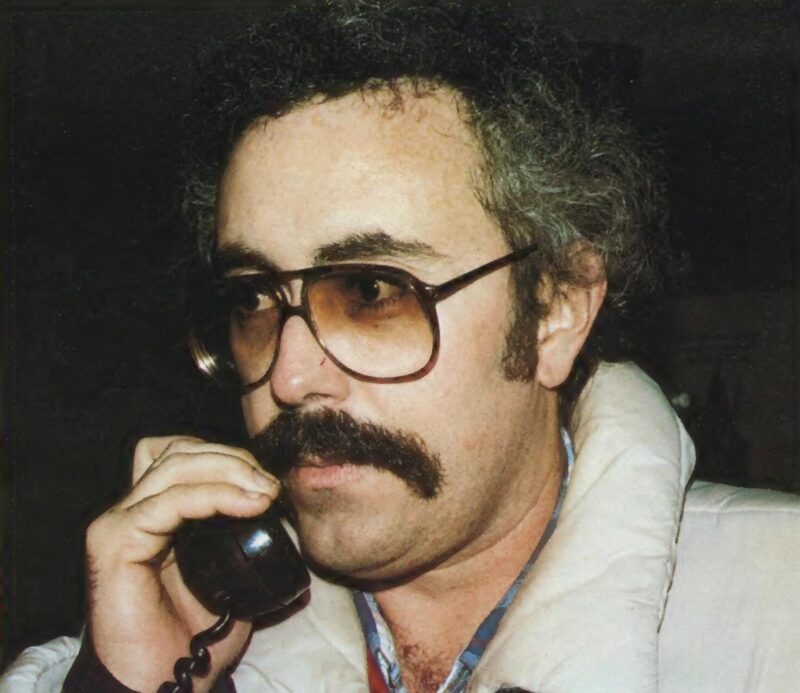
This job led Sammon to writing what is possibly his best-selling piece of work, Future Noir: The Making Of Blade Runner. Initially published in 1996, it’s a detailed account of the film’s creation, from the original Philip K Dick novel through to the release of the Director’s Cut in 1992. Revised editions of the book now include the story of how Blade Runner: The Final Cut was assembled for release in 2007.
As a magazine journalist, Sammon also wrote for publications such as The American Cinematographer, Cahiers du Cinema, The Los Angeles Times, Omni, Cinefex, and Cinefantastique. As he told Enterprise Incidents, Sammon used that access as a journalist to learn everything he could about the process of making movies.
“Any time I’ve been assigned to a film or any time I’ve been on a set,” he said, “I’ve tried my best to immediately get the work I’m being paid for out of the way and then spend whatever remaining time I have left learning the ropes. I’ve always found that on any set I’ve visited, people become genuinely helpful when you show them how interested you are in what they’re doing.”
Sammon had been lucky enough to work alongside big-name Hollywood talent by the early 1980s. “I’ve watched Ridley Scott direct Blade Runner, have been invited to go shooting with John Milius on General Franco’s own hunting preserve in Spain, and I’ve watched Clint Eastwood blow up helicopters off Catalina Island. I was just tired of these guys getting all the glory and decided it was time for me to get a piece of the pie.”


This is what led Sammon to create his own film inspired by Steven Spielberg’s E.T. He had watched and enjoyed the film in June 1982, and a couple of weeks later, while having dinner with his girlfriend Sherri, they talked about what it would be like to turn the story of E.T. inside out.
A couple of hours later, over dessert, Sherri turned to Paul and came up with the title for a story: P.P. – The Planetary Pal. Over the following two weeks, Sammon wrote a detailed script.
The film was a low budget affair, with Sammon providing around 90 percent of the financing. A joke title during production was, “How Low Was My Budget?”. All the same, he wanted the film to look slick.
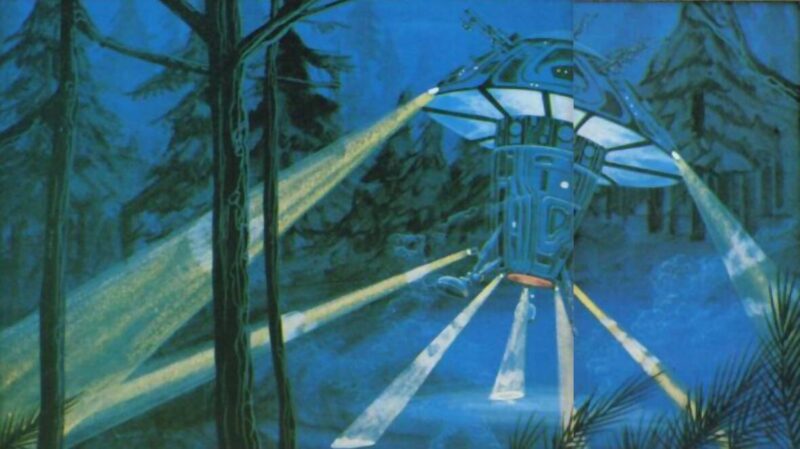
Sammon originally imagined that the film would be a 10 minute short; it later extended to around half an hour, and then again to feature length. He hoped that it would find a home on cable TV, he said in 1985, as he’d already managed to drum up interest from a couple of networks. (The cover of Enterprise Incidents introduces the film as “HBO’s Planetary Pal”.)
Despite the low budget, approximately 30 people were involved in the production. Sammon, as the originator of the project, was the director, producer and writer. His girlfriend Sherri was an associate producer.
The director of photography, his first time in that role, was Jerry Sykes. He’d previously worked on the films Maniac Cop and The Exterminator, two staple films of the VHS video rental days. Jerry also worked on Firefox, Poltergeist and several more big-name releases – though only in the sense that he was in charge of the cameras as they were taken from MGM Studios.
Despite P.P’s comedic nature, Jerry wanted a filmic. As he told Enterprise Incident, “You don’t have to have it brightly lit in a comedy and a lot of darkness in a tragedy. We just lit it naturally and used practical lights in the scene so it’s a very natural style.”
The rest of the technical crew was made up of carpenters, machinists, miniature makers, model makers, painters, graphic illustrators, storyboard people, actors, lighting cameramen and sound people. This certainly wasn’t an amateur affair.
The cast comprised around seven people, including 14 year-old Steve Bailey, who played the lead of Helliot (a not-so-subtle reference to E.T.’s protagonist, Elliott). Bailey lived in the San Diego area where the film was shot, and apart from school productions, this was his first big acting role.
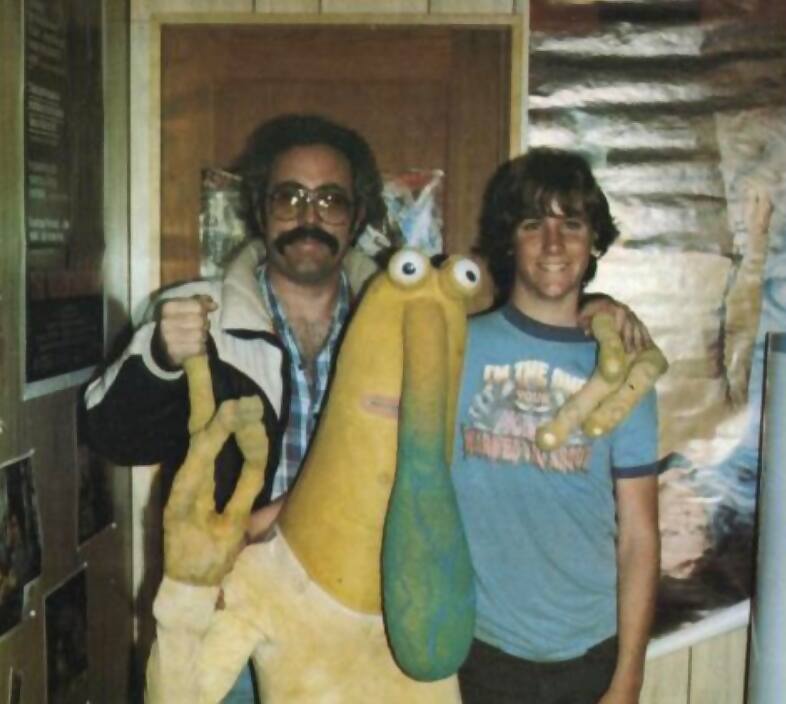
He enjoyed his time immensely on the film, stating, “It’s been really exciting, because I’ve never been involved with a real movie-making experience, and I was so scared when I got there. But they were real patient with me. I think the hardest thing was stopping from cracking up all the time!”
The plot of P.P. involved aliens representing Cozmo Beer, the “cheapest beer in the galaxy”. The aliens land on Earth and, when one of them wanders off for a bathroom break, is accidentally left behind. In taking a very different tone from its inspiration, the story reveals what might happen when a stranded alien meets a real teenage boy, or as Sammon tells it, “An all-American sadistic little shit.”
P.P. was also going to poke fun at other films in the science fiction genre, including Star Wars and The Empire Strikes Back with C-3PO and Yoda making appearances. “I’m trying to take a portion of the entire experience of all these big budget fantasy films and synthesise them down before lampooning them,” Sammon said.
Principal photography lasted several months, but this was largely due to the nature of the project. Financing came in at different times, cast and crew had other commitments with some even working for free. Director of photography Jerry Sykes claimed that there were only 20 to 25 filming days in total. He added that if all the money and preparation had been ready up front, the film could’ve been completed in two weeks. But during production, a decision had been made to extend the film from the aforementioned cable TV project of an hour to a full feature film length of almost 90 minutes.
The shoot sounded fairly uneventful – apart from one sequence shot in the Laguna Mountains, 50 miles outside San Diego. A huge alien ship set piece, measuring 20 feet tall and 15 feet wide, was erected in the dead of night. What followed was a four-night shoot to film sequences which would bookend the story. Conditions weren’t great, with the wind chill factor dropping as low as -17 degrees one night. Filming started at dusk and continued until dawn with most crew members working 20 to 22 hour days.
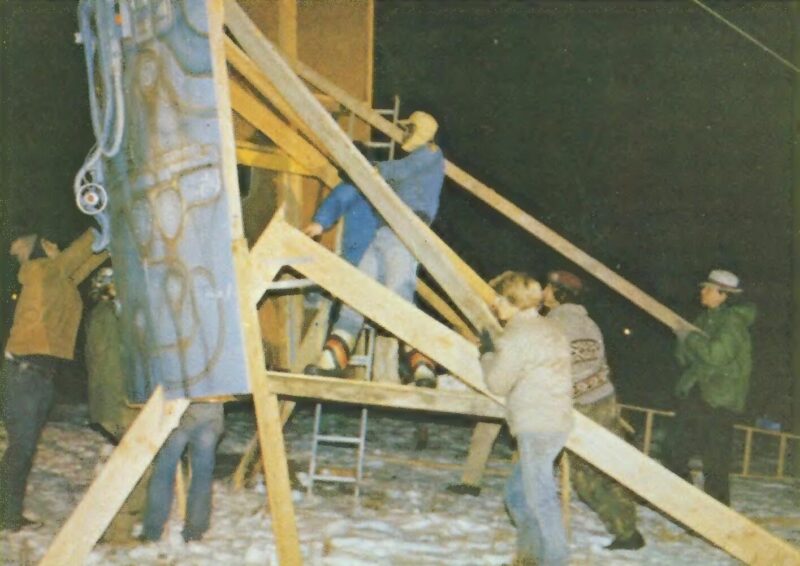
The snow at the location had melted and refrozen, creating a six-inch layer of ice which while being unpleasant to stand on for long periods of time. It also caused an accident for Sammon: he unfortunately slipped and suffered a hairline fracture to his right ankle.
Despite the harsh conditions, the last shot was completed on the final night, just before the sun rose. The only people on set were Paul and three crew members. Everyone else, as Sammon states, “succumbed to exhaustion and extreme hostility towards the director.”
It sounds like Paul came away from the experience with some fond memories, “It was a lot of fun for me because it gave me a chance to let my sadistic nature run unchecked. I had my actors running around in sub-zero temperatures in shorts and thin cotton shirts, and then had my aliens walking on their knees with frozen and sodden costume legs for hours on end. So it was quite enjoyable, that end of it.”
Hopefully, he was joking.
Production finished on the 1st February 1983, and it’s clear from what little information still exists that Sammon was proud of his work. Especially that a film made on a small budget looked so impressive on screen. In particular the alien creature, P.P., who was made with rubber gloves, painted styrofoam and other cheap oddments.
Sammon claimed that the alien character has such a great personality that you can overlook the cheapness of his build as the story plays out. P.P. was played by Michael Stuart, who was also the head of the film’s special effects.
There was still further work to be completed, however, including miniatures and a mixture of hand-drawn and stop-motion animation. Finally, a score was planned that would use synthesisers to emulate the sound of a John Williams-esque orchestral piece.
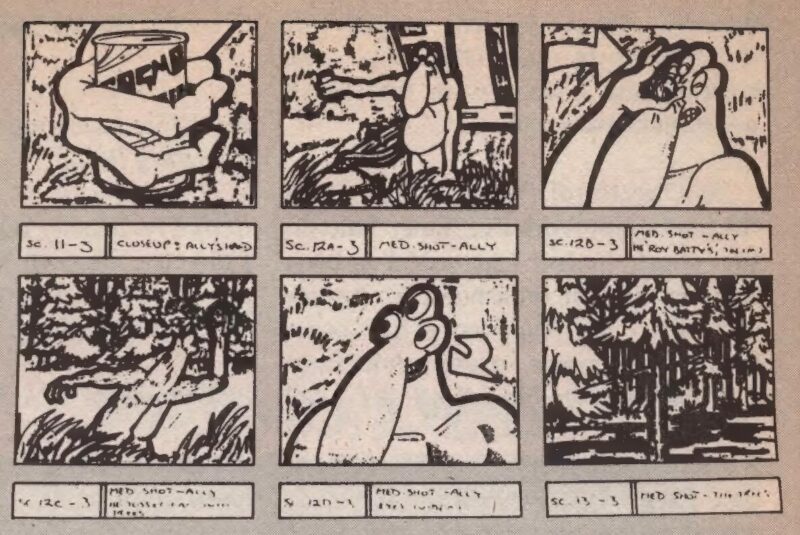
Sammon had enjoyed the project, but feared that taking up a new career in filmmaking at the age of 32 could’ve been a bad decision. By the end of filming, though, he knew he’d made the right choice. “I’ve come to realise my fears were neurotic bullshit, the fear of trying something new,” he said. “Filmmaking has come very easily to me. And I love it. I plan to continue.”
The film was intended to be shown on a small tour of the US in the latter half of 1983, but this never chappened. During 1984’s World Science Fiction Convention at Anaheim, California, Sammon made a presentation of P.P. – Planetary Pal which included a slide show of photos from the film. The response was said to be positive. A premiere was even arranged to take place in San Diego.
Sadly, actor Steve Bailey passed away on the 24th March 1985, aged 16, from leukaemia. Sammon wrote a letter to Cinefantastique magazine thanking them for the coverage of his still-to-be-released film in their May 1985 issue, noting, “All of us at Awesome Productions not only treasured Steve as an excellent actor but as a fine human being. Steve’s performance will be his legacy, but … we still miss him.”
In the end, P.P. never saw release, and is regarded as a piece of lost media. Exactly why it vanished only emerged years later. In 2023, a page on Reddit began a discussion about this lost film, and one user managed to get in contact with Sammon, asking him what happened.
Sammon replied that the film was fully completed and ready to go. However, during negotiations with a distributor in Europe, the unnamed business person was involved in some kind of dodgy deal, absconded from the United States and took the finished film with him.
The only remnants in Sammon’s possession are parts of the original negative and the soundtrack. When asked if these were likely to see the light of day, providing a glimpse of what could have been, he declined. It would be personally too difficult, he said, due to Bailey’s passing and the death of Larry Ortiz, the film’s production designer, in 2015.
Paul Sammon stated in the interview from 1985 that, “We’re just trying to show a film that’s funny. If we can make people laugh then we’ve succeeded. It’s as simple as that.”
Due to the actions of one unscrupulous individual, we’ll never know whether Sammon would’ve achieved that goal.